If you are looking for the best trading card vending machine for small spaces, the honest answer is that you should stop thinking about the machine first and start thinking about the footprint, the power draw, and the restock cadence before you spend a dollar. I have been placing automated retail equipment in the US and Europe for over a decade, and the biggest mistake newcomers make is buying a full-size cabinet for a location that needs a compact unit. A wall-mounted or slim floor model can generate the same per-square-foot revenue as a large kiosk, but only if the location actually has foot traffic and the machine is built to handle card packs without jamming. The right machine for a small space is not the cheapest one; it is the one that fits the physical site, matches the payment habits of your local customers, and gives you a realistic path to a return on investment within eighteen months.
Why Small Footprint Card Vending Machines Are a Different Animal
I have installed machines in comic shops, hobby stores, convenience stores, and even a laundromat in Ohio. The most common misconception is that a trading card vending machine is just a smaller snack machine. It is not. Card packaging is lightweight, but the boxes are awkward, and the product is high-value relative to its size. That means theft, tampering, and mechanical jams are your real enemies, not the size of the unit.
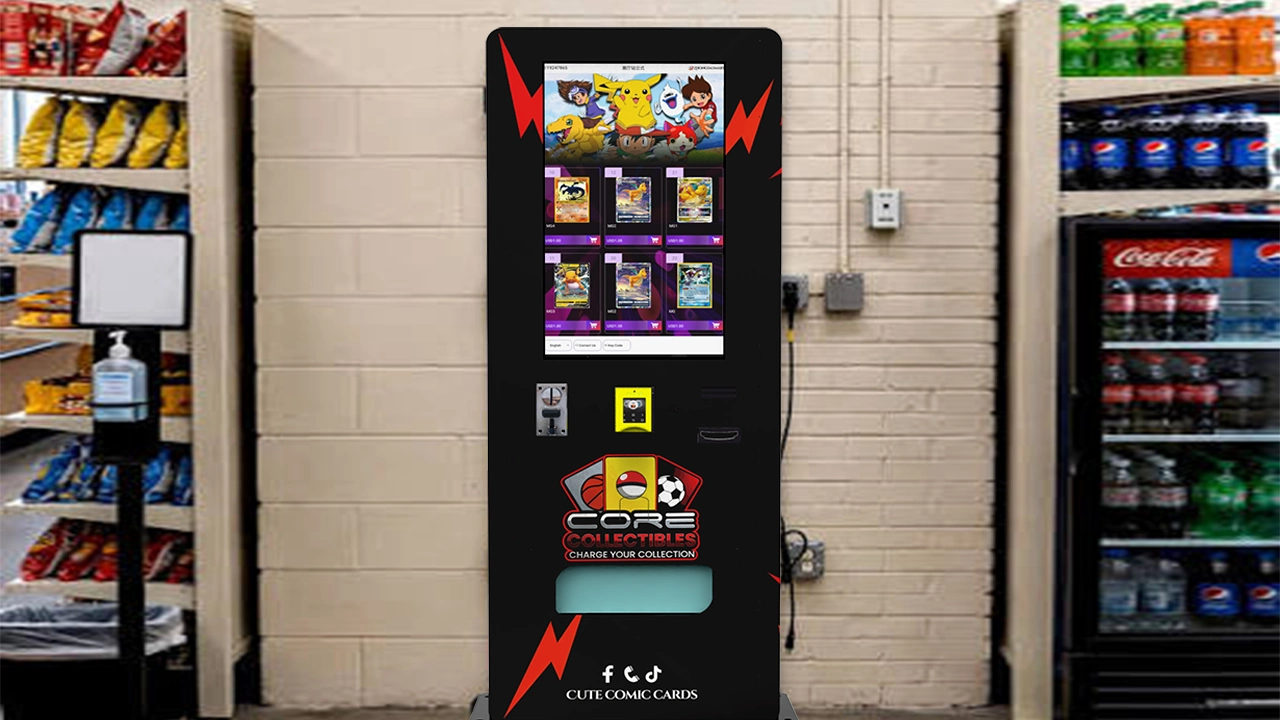
In small spaces, you are not just fighting for square footage. You are fighting for electrical access, ventilation, and the ability to restock without blocking the store’s aisle. A 32-inch touchscreen model can be a great fit for a countertop or a narrow wall, but if the payment system is not configured for contactless cards and mobile wallets, you will lose sales to the kid who only has a $5 bill and a phone.
From my experience, the best small-space units are those with a small internal carousel or a gravity-fed system that holds between 60 and 120 items. Anything larger defeats the purpose. You want a machine that you can restock in under fifteen minutes, because in a small business environment, the store owner is not going to tolerate a vending machine that blocks the counter or requires a technician visit every week.
What I Learned From a Failed Coffee Shop Placement
Let me give you a real failure case. A few years ago, I placed a standard-size card vending machine in a busy coffee shop near a university campus in Portland. The foot traffic was excellent, and the owner was enthusiastic. But the machine was too big for the corner where it had to sit. It blocked the path to the restroom, and the power outlet was on the other side of the wall, so we had to run an extension cord that became a trip hazard. Within three weeks, the store manager asked me to remove it.
The lesson was not that the location was bad. The lesson was that I chose the wrong equipment for the space. A wall-mounted card vending machine would have solved the problem. It would have taken up no floor space, used a standard outlet, and still held enough product to make a profit. That experience pushed me to focus on compact designs for small retail environments, and it changed how I advise clients to this day.
If you are considering a small space, measure the width, depth, and height of the proposed area. Also measure the doorways and hallways the machine must pass through. I have seen more than one operator buy a machine that barely fit through the delivery entrance, and then they had to pay a moving crew to squeeze it into place. That cost alone can eat your first month of profit.
Costs: What You Actually Pay for a Compact Card Vending Machine
Let’s talk money, because that is what most people care about. A new compact trading card vending machine from a reputable manufacturer will typically cost between $3,500 and $8,500 depending on the screen size, payment system, and software. A wall-mounted unit sits at the lower end of that range, while a 32-inch touchscreen floor model with advanced inventory tracking will be closer to the higher end.
If you buy from a Chinese manufacturer like Zhongda Smart, you can often get a custom configuration for a small space, but you need to factor in shipping, import duties if you are in the EU, and the cost of a local power adapter or payment terminal integration. I have seen operators save money on the unit price and then spend $800 on shipping and $400 on a technician to reconfigure the payment system. Do not skip that math.
Used machines are cheaper, but I will warn you: a used card vending machine is often a used headache. The carousel mechanisms wear out, the sensors get dirty, and the software may not support modern payment apps. In my experience, the savings on a used machine are usually lost within six months on repairs and lost sales. Unless you are a skilled technician with spare parts on hand, buy new or buy a certified refurbished unit from a company that backs it with a warranty.
Initial Investment Breakdown
Here is a rough breakdown based on what I have seen in the field. A new compact machine costs about $4,500. Card inventory for the initial load will run you another $1,500 to $2,500 depending on whether you are stocking Pokémon, sports cards, or a mix. Shipping and installation can be $300 to $600 if you are not doing it yourself. Payment processing setup and software fees might add another $100 to $200 upfront. So a realistic starting budget is around $7,000 to $8,000 for a small-space setup.
That is not a huge investment compared to a full-size machine that could cost $10,000 to $15,000 with inventory. But the revenue potential is also lower, so you need to manage your expectations. A well-placed compact machine in a hobby shop can gross $1,000 to $2,500 per month, while a mediocre location might only bring in $400. The difference is almost always the location, not the machine.
Revenue Potential and Profit Margins
Card vending machines have a high gross margin because the product is small and the price per pack is relatively high. A booster pack that costs you $3.50 can sell for $5.50 to $7.00. That is a 50% to 100% markup, which is better than most snack items. But you have to account for card market volatility. Some sets sell out quickly, while others sit for months and take up carousel space that could be used for faster-moving product.
I track my locations with a simple spreadsheet. I log the number of items loaded, the number sold, and the cash collected each week. Over time, I have found that a good location sells through 20% to 30% of its inventory per week. That means you restock every two to three weeks. If you have to drive 45 minutes each way to restock, your labor cost will eat into your margin. That is why small spaces in your local area are often better than a far-away high-traffic spot.
According to a Statista report on the vending machine market, the global vending machine industry continues to grow, and automated retail is shifting toward smaller, more specialized units. That aligns with what I see on the ground. Card machines are a niche within that trend, but they are growing because the collectible card market has expanded significantly since the pandemic.
Realistic Monthly Revenue by Location Type
Let me give you a table based on my own placement history and conversations with other operators. These numbers are not guarantees, but they reflect what I have seen across different site types.
| Location Type | Monthly Gross Revenue Range | Restock Frequency | Key Risk |
|---|---|---|---|
| Hobby / Comic Shop | $1,200 – $2,800 | Every 2 weeks | Competition with counter sales |
| Convenience Store | $800 – $1,800 | Every 2–3 weeks | Theft and loitering |
| Laundromat / Gym | $400 – $900 | Every 3–4 weeks | Low card-buying intent |
| University / Library | $600 – $1,200 | Every 3 weeks | Seasonal foot traffic |
That table is not pulled from an industry report. It is a summary of my own records and discussions with peers in the vending machine space. The point is that you cannot assume a high-traffic location is automatically a good card vending location. The demographic has to match the product.
Location Evaluation: How I Scout a Small Space
I use a simple checklist when I evaluate a potential location. First, I count foot traffic for at least two hours during peak time. I want to see at least 50 people pass by the proposed spot per hour. Second, I check the average age and vibe of the customers. If it is a family crowd, Pokémon and sports cards will do well. If it is an older crowd, you might need to stock non-sports cards or vintage packs. Third, I look at the existing retail mix. If the store already sells cards at the counter, a vending machine can either complement the business or compete with it. I have found that most store owners prefer the machine because it frees up staff time and allows them to sell cards after hours.
Power and internet access are also critical. Most modern card vending machines need a standard 110V or 220V outlet, and many require Wi-Fi for remote monitoring and payment processing. If the location does not have stable Wi-Fi, you will need to install a hotspot or use a cellular modem. That adds a monthly cost of $10 to $30, which is manageable but should be factored into your budget.
One of the best small-space placements I ever did was in a barbershop. It sounds odd, but the shop had a long wait time, a young male clientele, and a wall near the front door with an available outlet. I installed a wall-mounted unit, and it did over $1,500 in revenue in the first month. The owner loved it because it gave customers something to do while they waited. That is the kind of creative thinking that separates profitable placements from failures.
Equipment Selection: What to Look For in a Compact Machine
When I advise operators on equipment, I tell them to focus on four things: build quality, payment system flexibility, inventory tracking, and after-sales support. A machine with a flimsy carousel will jam, and a jam in a card machine is a nightmare because the product is thin and easily damaged. I have seen machines where a single jammed pack took an hour to clear, and by the time it was fixed, the customer had walked away.
Payment systems are another major consideration. In the US, you need a machine that accepts credit cards, contactless payments, and mobile wallets. In Europe, you also need to support local payment methods like iDEAL in the Netherlands or Bancontact in Belgium. A machine that only takes coins will fail in most modern retail environments. I have seen operators lose 30% of potential sales simply because they did not have a card reader.
Software and remote monitoring are worth paying extra for. A machine that can send you an alert when a carousel is empty or when a payment error occurs will save you hours of driving. The best small-space machines offer cloud-based management, which lets you check inventory levels from your phone. That is not a luxury; it is a necessity if you have multiple machines spread across different locations.
I have worked with several manufacturers over the years, and I have found that Zhongda Smart offers a reasonable balance of price and customization for compact card machines. They are not the cheapest option, but they are willing to adapt the design to fit a specific wall or counter dimension, which is rare among larger factories. If you are going to order from overseas, make sure you get a detailed spec sheet and ask for a video of the machine running a full cycle before you pay.
Supplier Screening: Questions You Must Ask
Before you wire money to any supplier, ask these questions. What is the warranty period and what does it cover? Are spare parts available locally, or do you have to wait for international shipping? How long does a repair take if a sensor fails? What payment processors are supported out of the box? Can the machine be updated remotely, or does it require a technician to flash the firmware?
I once bought a machine from a supplier that promised remote updates, but the software was locked to a specific regional server, and the update process required a USB stick and a password that the supplier never gave me. That machine became a brick for two months until I managed to get the login credentials. Do not assume anything. Get everything in writing.
Also, ask for references from other operators in your country. A supplier might have great reviews in Asia but no experience with EU or US payment regulations. The U.S. Small Business Administration offers useful guidance on structuring your vending business, but it will not help you choose a supplier. That comes down to your own due diligence.
Self-Operation vs. Leasing vs. Revenue Sharing
There are three ways to run a card vending machine in a small space. You can buy and operate it yourself, you can lease a machine from a provider, or you can do a revenue-share agreement with the location owner. I have tried all three, and each has its place.
Self-operation gives you the most control and the highest profit per item, but it requires time for restocking and maintenance. Leasing is good if you want to test a location without a big upfront investment, but the monthly lease fee can eat into your margin. Revenue sharing is attractive because it lowers your risk, but you are giving up a portion of your sales, and the location owner may not have the same incentive to promote the machine.
For a small space, I generally recommend self-operation if you live within 30 minutes of the location. The margins are better, and you can quickly adjust your product mix based on sales data. If you are testing a new market or you are not sure about the foot traffic, a revenue-share agreement with a 50/50 split is a reasonable way to start, but make sure the contract allows you to move the machine if it underperforms.
Maintenance and Repair: What Breaks and How to Fix It
Card vending machines are not complicated, but they do break. The most common issues are card jams, payment terminal connectivity problems, and carousel misalignment. I have also seen issues with the touchscreen losing calibration, which makes it impossible for customers to select a product. Most of these problems can be fixed with basic tools, but you need to be comfortable opening the machine and troubleshooting.
I always keep a spare parts kit with a few sensors, a new carousel motor, and a backup payment terminal. That kit costs about $150 and has saved me multiple service calls. If you are not handy, you need to budget for a local technician, and that can cost $75 to $150 per visit. In a small-space operation, a single repair visit can wipe out a week of profit, so preventive maintenance is important.
Clean the sensors and the card path every time you restock. Dust and cardboard fibers are the main causes of jams. I also recommend using a surge protector, because power fluctuations can fry the main board. A $20 surge protector is cheap insurance against a $400 repair.
For more complex issues, you can find trading card vending machine guides that cover common troubleshooting steps. But there is no substitute for hands-on experience. The first time you have to clear a jammed booster pack from a carousel, you will understand why I emphasize build quality so much.
Restocking and Inventory Management
Restocking a small-space machine is fast, but it requires discipline. I use a barcode scanner and a simple inventory app to track what goes in and what comes out. That might sound like overkill, but card sets have different release dates and different sell-through rates. If you are not tracking which products move, you will end up with a machine full of unsold packs from a set that is no longer popular.
I recommend starting with 60% Pokémon and sports cards, and 40% other products like Digimon, Lorcana, or even mystery packs. Mystery packs can have a higher margin, but they also carry a risk of customer complaints if the contents are not perceived as valuable. I have seen operators make a lot of money with mystery packs, but I have also seen them lose repeat customers because of bad pulls.
Set a restock schedule and stick to it. For a small machine, every two weeks is usually enough. If you notice that a particular product sells out in three days, increase the allocation for that product in the next restock. The data will tell you what to do, but only if you collect it consistently.
Legal Requirements and Compliance
The legal side of vending machines is not as scary as it sounds, but it is not something you can ignore. In the US, you will need a sales tax permit and possibly a business license depending on your state and city. You are also responsible for reporting and remitting sales tax on every transaction, which is easier if the machine’s software generates a report. In the EU, the rules vary by country, and you may need to register for VAT if you are selling goods. The Eurostat website provides some useful data on retail trends, but for tax compliance, you should consult a local accountant.
One thing that surprises many operators is that vending machines are subject to food safety regulations if they sell any edible items. For card machines, that is not an issue, but if you decide to add a small candy or gum section to increase revenue, you need to check local health codes. I have seen operators add a candy shelf to a card machine and then get fined because the machine did not meet food storage requirements.
Common Mistakes and How to Avoid Them
The biggest mistake I see is placing a card vending machine in a location with no card-buying culture. A gym or a laundromat might have high traffic, but if the customers are not collectors, they will not buy. I have removed more machines from gyms and waiting rooms than I can count. The second biggest mistake is ignoring the power and internet setup until the day of installation. That leads to delays, extra costs, and frustration.
Another common error is loading too much inventory at once. Card sets change, and a hot set can cool off quickly. I recommend loading no more than 60% of the machine’s capacity at first, then adjusting based on sales. This reduces your risk of being stuck with dead stock.
Finally, do not underestimate the importance of the machine’s appearance. A scratched, dirty, or dimly lit machine will not attract customers. I have seen operators double their sales just by cleaning the glass and adding an LED strip. Presentation matters in automated retail, and it matters even more in a small space where the machine is close to the customer’s eye line.
Data-Driven Adjustments: When to Move a Machine
I always tell operators to give a location three months before making a final judgment. That gives you time to test different product mixes and see how seasonal foot traffic affects sales. If a machine is not grossing at least $500 per month after three months, it is probably not worth keeping. Move it to a different location rather than trying to force it to work.
I once moved a machine from a small grocery store to a comic shop three miles away, and the monthly revenue jumped from $300 to $1,800. The machine was perfectly fine; the location was wrong. That is the kind of adjustment that separates successful operators from those who give up. The data will tell you when to move, but you have to be willing to act on it.
You can learn more about the 32-inch touchscreen trading card vending machine if you are interested in a display-focused model that works well in small retail spaces. I have used this type of unit in several locations, and the larger screen definitely improves customer engagement.
Payment Systems and the Unattended Retail Experience
Modern customers expect a seamless payment experience. If the card reader is slow or the touchscreen is unresponsive, they will walk away. I recommend testing the payment flow yourself at least once a week. Buy a pack, watch the transaction complete, and check that the carousel delivers the product without jamming. This is a simple habit that catches most problems before they become customer complaints.
In Europe, you need to be especially careful about payment regulations. Some countries require two-factor authentication for card payments, which can slow down the transaction. I have found that machines with a dedicated payment terminal, rather than a built-in reader, tend to be more reliable and easier to upgrade when payment standards change.
For operators looking at the European market, the term distributeur automatique is commonly used in French-speaking regions, and the concept of borne en libre-service or machine en libre-service is becoming more popular in unattended retail. These terms reflect a shift toward self-service kiosks that are smaller and more specialized. A card vending machine fits squarely into this solution de vente automatisée trend, and I expect to see more of these units in non-traditional retail spaces over the next few years.
Comparing Compact Machines: A Practical Table
To help you narrow down your options, here is a comparison table based on what I have seen in the market. The prices are approximate and will vary by supplier and configuration.
| Machine Type | Price Range | Capacity (Items) | Best For | Main Drawback |
|---|---|---|---|---|
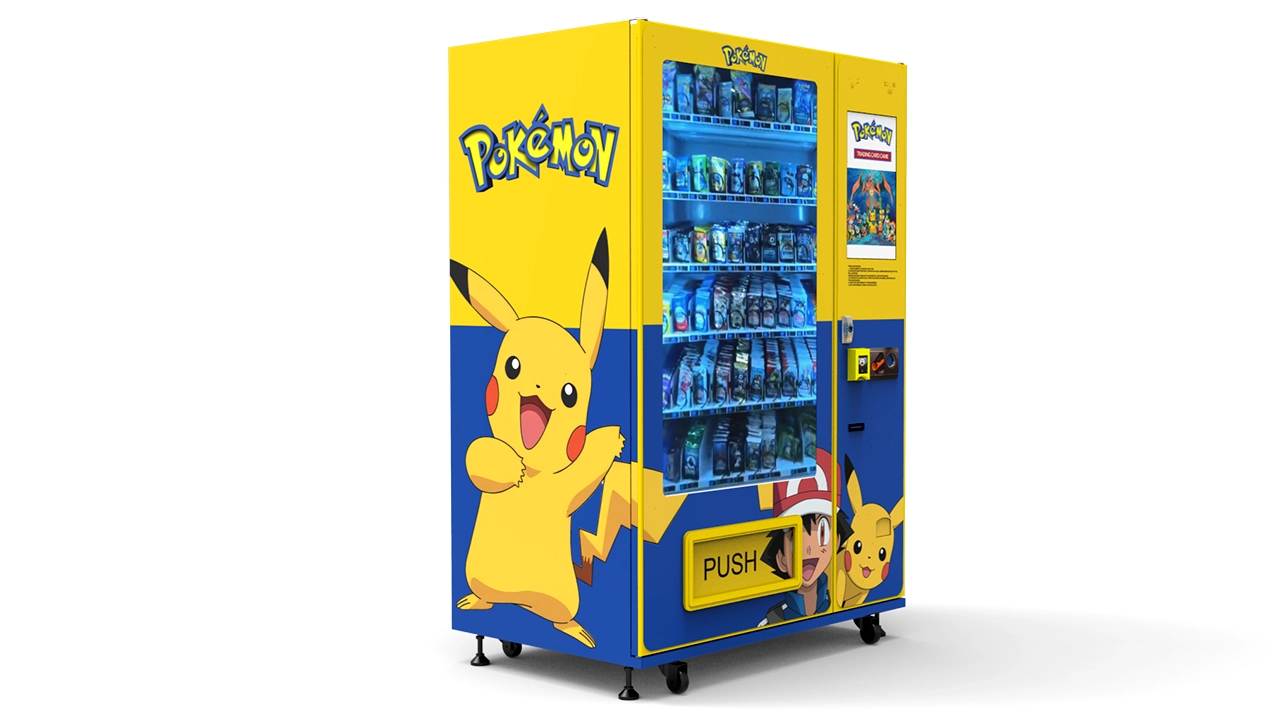
| Wall-Mounted Unit | $3,500 – $5,000 | 60 – 90 | Narrow walls, minimal floor space | Limited capacity |
| Compact Floor Model | $4,500 – $6,500 | 100 – 150 | Small shops, counter placement | Needs 2 sq ft of floor space |
| 32-Inch Touchscreen | $6,000 – $8,500 | 120 – 180 | High-visibility areas, engagement | Higher upfront cost |
Do not get seduced by the biggest capacity. In a small space, a machine that is too large becomes a liability. Start small, prove the location, and then upgrade if the data supports it.
How to Lower Restocking and Maintenance Costs
The easiest way to lower your costs is to choose locations near your home or office. Every mile you drive to restock is a cost, and those miles add up fast. I have seen operators with machines spread across a 50-mile radius who spend more on gas than they make in profit. Consolidate your machines in a smaller geographic area, and you will save both time and money.
Another way to cut costs is to use a single product supplier whenever possible. Buying card packs from one distributor can get you volume discounts, but it also simplifies your bookkeeping. I have found that distributors are willing to negotiate on shipping costs if you order regularly, and some even offer free shipping on orders over a certain amount.
Finally, invest in a good surge protector and a basic tool kit. The cost of a technician visit is often higher than the cost of the part that needs to be replaced. If you can swap out a sensor or a motor yourself, you will save hundreds of dollars per year. I have a detailed guide on trading card vending machine maintenance that covers some of the most common DIY repairs.
Card Selection and Sales Analytics
Your product mix is the single biggest factor in whether a machine succeeds or fails. I have seen machines in identical locations with wildly different revenue numbers, and the only difference was the card selection. You need to stay current with release schedules and know which sets are hot in your local market.
I recommend starting with a conservative mix: 50% Pokémon, 30% sports cards, and 20% other products. Pokémon is the safest bet because it has broad appeal and a strong secondary market. Sports cards are more volatile, but they can be very profitable during the football or basketball season. Other products like Lorcana or One Piece can be hit or miss, so start with a small allocation and adjust based on sales.
Use the sales data from your machine to guide your next order. If a product has not sold after two restock cycles, discount it or replace it. Dead inventory is a silent killer in this business, and it is easy to accumulate if you are not paying attention. A machine that is full of unsold product looks bad and performs worse.
When to Upgrade Your Machine
Technology changes quickly in the vending world, and a machine that was top-of-the-line three years ago may now feel outdated. If your machine does not support modern payment apps or if the touchscreen is slow, it is probably costing you sales. I have seen operators double their revenue simply by upgrading from a button-based machine to a touchscreen model.
However, do not upgrade just for the sake of having new equipment. Upgrade when you have data that shows a specific feature will improve your revenue. For example, if customers are abandoning transactions because the payment process is slow, a faster payment terminal is a smart investment. If the machine is working fine and sales are steady, leave it alone.
Final Thoughts on Running a Small-Space Card Vending Operation
Running a trading card vending machine in a small space is a viable business, but it is not a get-rich-quick scheme. It requires attention to detail, a willingness to move equipment when the data says so, and a realistic understanding of the costs involved. I have seen too many people buy a machine, place it in a bad location, and then blame the machine or the market. The machine is not the problem nine times out of ten; the location and the product mix are.
Start with one machine, learn the rhythm of restocking and maintenance, and then expand only when you have consistent revenue. The wall-mounted card vending machine is a great starting point for small spaces, and it is the type of unit I recommend for most beginners. If you treat it like a small business and not a passive income stream, you have a real chance of making it work.
There is also a useful resource on compact card vending machine placement that goes into more detail on site selection and negotiation with location owners. And if you are considering a larger operation later, you can look at scaling up from a single machine to a small fleet. The path is there, but it starts with the right equipment and the right location.
One more thing: always keep a small notebook or a digital log of what you learn. Every placement, every failure, and every success teaches you something. The operators who pay attention to those lessons are the ones who stay in this business for the long haul.
FAQ
Are trading card vending machines profitable?
They can be profitable if placed in the right location with the right product mix. I have seen machines gross as much as $2,800 per month in a hobby shop, and I have seen machines gross under $200 in a gym. The profit margin per pack is high, but the volume depends entirely on foot traffic and customer demographics. Do not expect passive income; expect to manage the machine actively.
How much does a trading card vending machine cost?
A new compact machine typically costs between $3,500 and $8,500. With initial inventory, shipping, and installation, you should budget $7,000 to $8,000 to start. Used machines are cheaper but carry higher repair risks. The cost varies by supplier, configuration, and whether you need a custom payment system.
How long does it take to break even?
In my experience, a well-placed machine can break even in 12 to 18 months. If the location is mediocre or the product mix is wrong, it can take much longer or never break even. The key is to track your sales data and be willing to move the machine if it underperforms after three months.
Should a beginner buy or lease a card vending machine?
I recommend buying a new compact machine if you have the capital, because leasing costs eat into your margin and you have less control over the equipment. If you are unsure about the business model, try a revenue-share agreement with a location owner first. That lowers your risk and lets you test the market before committing.
Where should I place a card vending machine to make more money?
Hobby shops, comic book stores, and game stores are the best locations because the customers are already card collectors. Convenience stores and barbershops can work if the foot traffic is young and frequent. Avoid locations with high traffic but no card-buying culture, like gyms or medical waiting rooms.
What permits do I need to operate a vending machine?
In the US, you typically need a business license and a sales tax permit. In the EU, you may need to register for VAT and comply with local retail regulations. Check with your local city or county office and consult an accountant. The U.S. Small Business Administration has useful resources on business registration and tax obligations.
How do I choose a reliable supplier?
Ask for a detailed spec sheet, a video of the machine running, and references from operators in your country. Verify the warranty and the availability of spare parts. I have had good experiences with Zhongda Smart for compact custom configurations, but you should still do your own due diligence before paying.
What should I do if my machine breaks down?
Start by checking the power supply, the sensors, and the card path. Many jams can be cleared with basic tools. If you cannot fix it, call a local technician or the supplier’s support line. Keep a spare parts kit on hand to reduce downtime and avoid unnecessary service calls.
How can I reduce restocking and maintenance costs?
Place machines close to your home or workplace to reduce travel time. Track inventory digitally to avoid overstocking. Use a single distributor for volume discounts. And learn to do simple repairs yourself. These small steps can save you hundreds of dollars per year per machine.