If you’re looking at trading card vending machines and wondering how many you need to actually turn a profit, the honest answer is usually one—if you place it right, stock it smart, and treat it like a small business rather than a passive ATM. I’ve been in the vending industry for over a decade, and I’ve watched operators lose money with five machines while others clear solid monthly income with a single unit in the right spot. The number that matters isn’t how many machines you own, but how many transactions each one generates per day. In my experience, a single trading card vending machine placed in a high-traffic hobby shop or mall corridor can gross anywhere from $800 to $2,500 a month, depending on location, card selection, and pricing. Before you scale up, you need to understand the math behind one profitable unit—then replicate it.
Why Trading Card Vending Machines Are a Different Beast
Traditional snack and soda vending machines have been around for decades, and the economics are well understood. Trading card vending machines, however, operate in a different lane. They sell high-value, low-weight items like Pokémon, sports cards, and collectible card game packs. The margin per transaction is often higher than a candy bar, but the inventory costs more and the customer expectations are completely different.
In my early days, I ran a small route of snack machines and thought card machines would be a simple add-on. I was wrong. Card buyers are not impulse snack buyers. They are collectors, resellers, and kids with birthday money. They want to see what’s inside, they want a fair price, and they expect the machine to feel modern and trustworthy. A beat-up old snack machine retrofitted to hold card packs will not cut it.
That’s the first lesson I learned the hard way. I bought a used machine from a liquidation auction, converted the spirals to hold booster packs, and placed it in a flea market. It sat there for three weeks before I pulled it out. The machine looked cheap, the payment system was clunky, and customers didn’t trust it. I lost about $400 in that experiment, not counting my time. The successful operators I know today use purpose-built card vending machines with touchscreens, secure dispensing mechanisms, and modern payment options.
What Does a Trading Card Vending Machine Actually Cost?
Let’s talk real numbers. A new, purpose-built trading card vending machine from a reputable manufacturer will cost you between $4,000 and $12,000 depending on size, screen, and features. I’ve seen wall-mounted units start around $3,500, while larger floor models with 32-inch touchscreens run closer to $10,000 or more. If you buy from a manufacturer like Zhongda Smart, you’re typically looking at the mid-to-upper end of that range, but you get better build quality and support.
Used machines are cheaper, usually $1,500 to $5,000, but you take on risk. I’ve bought used machines that looked fine in photos and arrived with worn-out dispensing motors, cracked screens, and outdated card readers. Repair costs add up fast. A single motor replacement can run $80 to $150 in parts, and if you’re not handy, labor adds more. In my experience, buying used is only worth it if you can inspect the unit in person and test every function.
Beyond the machine itself, you have installation costs, which can range from $200 to $800 depending on whether you need electrical work, anchoring, or custom mounting. Then there’s inventory. A basic starting inventory of Pokémon and sports card products will set you back $1,500 to $3,000, depending on how deep you want to stock. You also need to factor in payment processing fees, which usually run 2.5% to 4% per transaction, and if you use a cashless system like a card reader or mobile payment, there may be monthly software fees.
Let me give you a rough initial investment breakdown for a single floor-model machine:
| Expense Item | Low End | High End |
|---|---|---|
| New machine (32-inch touchscreen) | $6,000 | $10,500 |
| Installation and electrical | $200 | $800 |
| Initial inventory | $1,500 | $3,500 |
| Payment processing setup | $100 | $300 |
| Miscellaneous (signage, tools, lock) | $100 | $300 |
| Total | $7,900 | $15,400 |
That’s your upfront exposure. You can reduce it by starting with a wall-mounted unit or a smaller machine, but you also cap your revenue potential. A wall-mounted card vending machine is great for tight spaces, but it holds less inventory and may need restocking more often.
How Many Machines Do You Need to Make a Profit?
The short answer is one, if it’s in a good location. But let me unpack that because “profit” means different things to different people. If you’re looking for side income, one machine generating $800 a month after inventory costs is decent. If you want to replace a full-time salary, you’re going to need multiple machines or a very high-traffic location.
In my experience, a well-placed card vending machine in a hobby shop, comic book store, or mall kiosk area can do 10 to 30 transactions per day. Average transaction value is usually $5 to $20, though I’ve seen single transactions over $100 when someone buys multiple packs or a higher-end product. Let’s say your average sale is $12 and you do 15 transactions a day. That’s $180 a day, or about $5,400 a month in gross revenue. Your cost of goods sold for card products is typically 50% to 65% of retail price, depending on what you buy and how you price it. So you’re looking at gross profit of roughly $1,900 to $2,700 a month from one machine.
Subtract your location commission, which can range from 10% to 30% of gross sales if you’re placing it in someone else’s business. Many operators pay a 20% commission to a store owner. That’s $1,080 a month on $5,400 in sales. Then subtract payment processing fees, maybe $150 to $200, and your net before maintenance is around $1,000 to $1,500 a month. That’s not bad for a single machine, but it’s not a fortune either.
To make a real living, you need four to six machines performing at that level. But here’s the catch—finding four to six locations that all perform that well is hard. I’ve seen operators with eight machines where only three are profitable. The others are tied up in low-traffic locations or poorly maintained, and they drag down the overall return. So the number you need depends entirely on the quality of your locations.
Location Is Everything: My Success Case
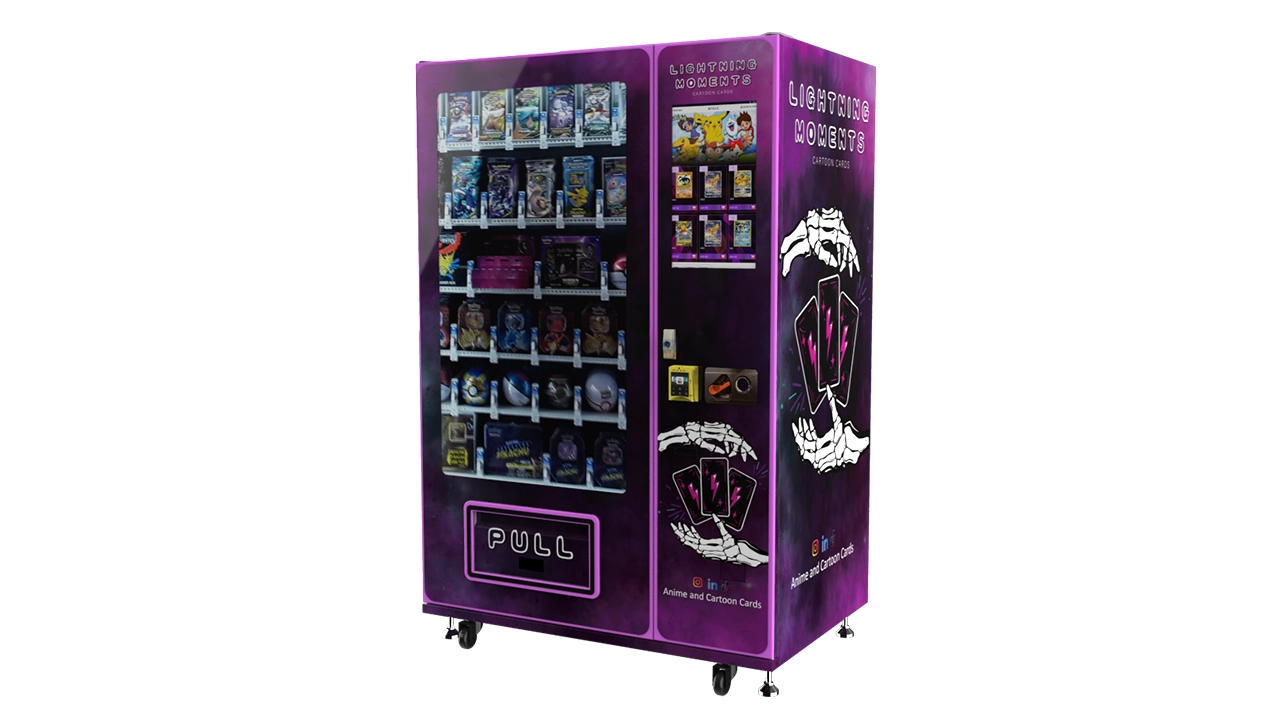
Let me tell you about a successful placement I had a few years back. A local trading card shop owner agreed to let me place a machine near the counter. He had a steady flow of customers, mostly young adults and teenagers, and he was already selling card products at retail. I set up a 32-inch touchscreen card vending machine with a nice display of booster packs and single cards behind glass.
The machine did well from day one. The owner liked it because it freed up his staff from handling small transactions and let customers browse cards even when the counter was busy. I paid him a 20% commission on gross sales. In the first month, the machine did $4,800 in sales. After cost of goods, commission, and fees, I cleared about $1,300. That machine paid for itself in about seven months.
What made that location work? First, the audience was already there. Every person walking into that shop was a potential buyer. Second, the machine was visible and accessible. Third, the store owner was supportive and even pointed customers to the machine. That last point is huge. A location owner who sees your machine as a benefit rather than an eyesore will quietly help you succeed.
The Failure Case: What I Learned From a Bad Placement
On the flip side, I once placed a machine in a laundromat. It sounded good in theory—high foot traffic, people with time to kill, and cash in hand. But the audience was wrong. Laundromat customers are not typically card collectors. The machine sat idle for weeks. I tried different products, lower prices, and even a sign, but nothing worked. After two months, I moved the machine to a gaming store and it started doing okay, but I lost $600 in rent and commission during that time.
The lesson is that foot traffic alone doesn’t mean anything. You need the right foot traffic. A card vending machine in a grocery store might see hundreds of people a day, but if they’re not collectors, they won’t buy. I’ve learned to evaluate locations based on the existing customer profile, not just raw numbers.
That’s why I always recommend starting with one machine in a location you already have a relationship with, or one where you can observe the customer base for a few days. Talk to the store owner. Ask about their card product sales. Look at what else is selling. If a shop already moves a lot of trading cards, that’s a strong signal.
Types of Machines and Configurations
There are several types of card vending machines, and your choice affects both cost and performance. The most common are floor-standing models with a large touchscreen, wall-mounted units, and countertop versions. Each has its place.
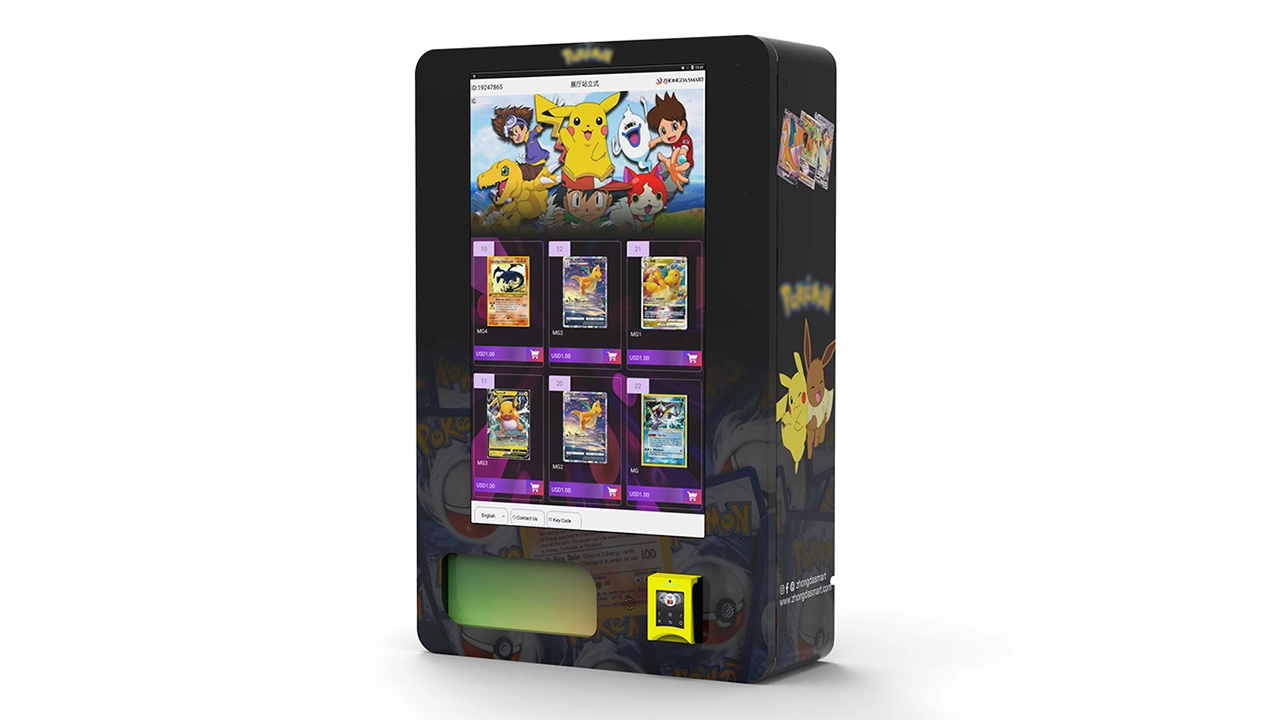
Floor-standing machines with touchscreens are the most popular right now. They offer a modern self-service kiosk experience, can display product images and prices dynamically, and often have better security. I prefer these for high-traffic retail locations because they look professional and attract attention. The downside is the upfront cost and the footprint.
Wall-mounted card vending machines are a good option if floor space is tight. They cost less, typically $3,000 to $6,000, and can be installed in narrow corridors or near checkout counters. However, they hold less inventory and may need restocking more frequently. I’ve seen them work well in game stores and hobby shops where space is at a premium.
Countertop units are the smallest and cheapest, but they’re also the least impressive. They work for very low-traffic spots, but I generally advise against them unless you’re testing a location on the cheap. The revenue ceiling is low, and customers may not take them seriously.
Another consideration is the payment system. Modern machines should accept credit cards, debit cards, mobile payments like Apple Pay and Google Pay, and ideally contactless payments. Cash-only machines are a hard sell in 2024. I’ve seen operators lose sales simply because they didn’t accept cards. A good payment system adds cost but pays for itself in higher conversion rates.
Comparing Machine Types and Their Economics
Let me give you a quick comparison table based on my experience and typical market pricing. These are rough figures, and your actual numbers will vary based on location and supplier.
| Machine Type | Initial Cost | Inventory Capacity | Typical Monthly Revenue | Best Use Case |
|---|---|---|---|---|
| Countertop | $1,500–$3,000 | Low (50–100 packs) | $300–$800 | Testing a location, very small spaces |
| Wall-mounted | $3,500–$6,500 | Medium (150–300 packs) | $700–$1,800 | Game stores, hobby shops, tight spaces |
| Floor-standing (basic) | $5,000–$8,000 | High (300–500 packs) | $1,200–$3,000 | Malls, comic shops, entertainment venues |
| Floor-standing (touchscreen) | $7,000–$12,000 | High (400–600 packs) | $1,500–$4,000 | High-traffic retail, flagship placements |
These numbers are based on my own routes and conversations with other operators. They are not official statistics. Your actual revenue will depend on location, product mix, pricing, and how often you restock. But the table gives you a sense of what to expect.
Buying vs. Leasing: What I Recommend
New operators often ask whether they should buy or lease a trading card vending machine. In my opinion, buying is almost always better if you have the capital. Leasing sounds attractive because it lowers upfront costs, but you end up paying more over time and you’re locked into a contract. I’ve seen operators sign lease agreements with high monthly fees and restrictive terms that made it hard to move the machine to a better location.
If you’re short on cash, consider buying a used machine or a smaller wall-mounted unit to start. You can always upgrade later. The key is to get a machine that works reliably and has a good payment system. A machine that breaks down frequently will kill your revenue and your relationship with the location owner.
When you buy, make sure you understand the warranty and support terms. Some manufacturers offer one-year warranties, others offer longer. Zhongda Smart, for example, provides solid support and replacement parts, which matters when you’re running a business and can’t afford downtime. I’ve had machines from cheap suppliers where getting a replacement part took weeks. That’s lost revenue and a frustrated location owner.
Choosing a Supplier: What to Look For
Supplier selection is one of the most important decisions you’ll make. I’ve dealt with manufacturers who promised the world and delivered machines that barely worked, and I’ve dealt with suppliers who were responsive and honest. Here’s what I look for now:
- Build quality: Look at the cabinet thickness, the dispensing mechanism, and the screen. A flimsy machine will not survive the abuse of high-traffic retail.
- Payment system reliability: Test the card reader and mobile payment functionality. A machine that rejects cards will lose sales.
- Software and remote monitoring: Some machines offer remote monitoring so you can check inventory levels and sales data without visiting the site. This is a huge time saver.
- Warranty and parts availability: Ask about the warranty length and how quickly you can get replacement parts. A supplier with a local warehouse or fast shipping is worth more than a slightly lower price.
- References: Ask for contact details of other operators who bought from the same supplier. A legitimate manufacturer will be happy to share references.
I’ve seen too many operators buy the cheapest machine they could find online and then spend months dealing with technical issues. That’s how you lose money, not make it. A slightly higher upfront cost is worth it if it means fewer breakdowns and better customer experience.
Where to Place Your Machines: A Practical Framework
Let me give you a framework for evaluating locations. I use this checklist before I place any machine:
- Existing customer base: Does the location already attract card collectors or hobbyists? Look at what products they sell and who buys them.
- Foot traffic volume: How many people walk by the machine each day? I look for at least 100–200 people per day in the immediate area.
- Operating hours: Longer hours mean more sales opportunities. A store open 12 hours a day will outperform one open 6 hours.
- Security and supervision: Is the machine in a visible, supervised area? Theft and vandalism are real risks.
- Commission expectations: What does the location owner want as a cut? Anything over 30% is usually too high.
- Accessibility: Can you restock easily? Is there parking nearby? If restocking takes two hours, that eats into your profit.
I’ve had the best results with comic book shops, trading card stores, game cafés, and entertainment venues. These places already have the right customer base, and the owners usually understand the value of a card vending machine. Malls can work if you get a good spot, but rent and commissions are higher, and you may need to deal with mall management bureaucracy.
Inventory Management and Restocking
Inventory is your biggest variable cost, and managing it well is the difference between profit and loss. Card products move fast, especially new releases and popular sets. If you don’t restock frequently, your machine will look empty and customers will lose interest. If you overstock, you tie up cash in inventory that might not sell.
I recommend keeping your machine at least 70% full at all times. A machine that looks half-empty creates a negative impression. You should also track which products sell and which don’t. Some packs sell out within days of a new release; others sit for months. Use your sales data to adjust your ordering.
Restocking frequency depends on your sales volume. A high-performing machine might need restocking twice a week. A slower one might only need a visit every two weeks. Build a schedule and stick to it. I’ve seen operators lose money because they waited too long to restock and missed the sales window for a hot new release.
Maintenance and Repairs: What to Expect
Vending machines break down. It’s a fact of the business. The most common issues I’ve encountered are jammed dispensing mechanisms, faulty card readers, and screen problems. Some of these you can fix yourself with basic tools and spare parts. Others require a technician, and that’s where vending machine repair costs can eat into your profit.
I always keep a small toolkit and a few spare parts on hand. A jammed motor is often easy to clear if you know what you’re doing. But if you’re not comfortable with basic electrical work, you’ll need to budget for repairs. A typical service call costs $75 to $150, plus parts. If your machine breaks down once every few months, that’s manageable. If it breaks down weekly, you have a bigger problem.
Preventive maintenance is key. Clean the machine regularly, check the payment system, and test the dispensing mechanism. A machine that looks dirty or runs poorly will lose customer trust. I’ve seen operators lose a location simply because their machine was unreliable.
Data and Market Context
Let me give you some context from public data. According to a Statista report, the global vending machine market was valued at over $40 billion in 2023 and is expected to grow steadily over the next decade. That doesn’t specifically cover card vending machines, but it shows the broader automated retail trend is healthy.
IBISWorld’s vending machine operator industry report notes that the industry has been adapting to cashless payments and healthier product offerings, which aligns with what I’ve seen in the card vending segment. Customers expect modern payment options, and operators who provide them do better.
The U.S. Small Business Administration recommends that any new business model be tested on a small scale before scaling up, and I couldn’t agree more. Start with one machine, learn the operational rhythm, and only add more when you have consistent data showing the first machine works.
That said, I want to be clear: my revenue and cost figures are based on my own experience and conversations with other operators, not on published statistics. Your numbers will vary. A machine that does $3,000 a month in one location might do $500 in another. Don’t assume you’ll hit the high end of any range just because you bought a machine.
Common Mistakes New Operators Make
I’ve made plenty of mistakes myself, and I’ve watched others make the same ones. Here are the most common:
- Buying cheap equipment: A low-quality machine will cost you more in repairs and lost sales than you save upfront.
- Ignoring location quality: Placing a machine in a low-traffic location because it’s easy is a recipe for failure.
- Overpaying for inventory: Buying card products at retail and selling them at retail leaves little margin. You need access to wholesale or bulk pricing.
- Not tracking sales data: If you don’t know what’s selling, you can’t make good decisions.
- Neglecting maintenance: A broken machine is a silent profit killer.
- Signing bad commission deals: Giving away 30% or more of your gross sales makes it hard to profit.
Avoid these and you’ll be ahead of most new operators.
Scaling Up: When to Add More Machines
Once you have one machine that’s consistently profitable for three to six months, you can start thinking about scaling. But don’t just buy more machines and hope for the best. Look for locations that match the profile of your successful machine. If your profitable machine is in a comic book store, look for other comic book stores. If it’s in a game café, target similar venues.
I’ve seen operators scale from one to five machines within a year, but only because they had a clear system for evaluating locations and a reliable restocking routine. Others have tried to scale too fast and ended up with a fleet of unprofitable machines. The number you need to make a profit is less important than the quality of each placement.
Final Thoughts
So, how many trading card vending machines do you need to make a profit? One, if you do it right. Start small, learn the business, and only expand when you have proof that your model works. The machine is just a tool; your skill in choosing locations, managing inventory, and maintaining the equipment is what determines your success. I’ve seen people make good money with a single machine, and I’ve seen people lose thousands with a fleet of poorly placed units. The difference is always in the execution, not the count.
This is a real business with real risks, and it’s not a get-rich-quick scheme. But if you’re willing to put in the work, it can be a solid source of income. Just don’t expect every location to be a winner, and don’t be afraid to move a machine if it’s not performing. That flexibility is one of the best things about this industry.
Frequently Asked Questions
Are trading card vending machines profitable?
They can be, but profitability depends on location, product selection, and how well you manage inventory and maintenance. A well-placed machine can generate $1,000 to $3,000 a month in gross revenue, but a poor location can lose money. In my experience, one good machine is more profitable than five poorly placed ones.
How much does a trading card vending machine cost?
A new machine typically costs between $4,000 and $12,000, depending on size and features. Wall-mounted units start around $3,500, while larger floor models with touchscreens cost more. Used machines are cheaper but come with repair risks.
How long does it take to recoup the investment?
Based on my experience, a machine that performs well can pay for itself in 6 to 12 months. Slower locations can take 18 months or longer, and some never pay off. It depends heavily on location and your ability to control costs.
Should I buy or lease a card vending machine?
I recommend buying if you have the capital. Leasing often costs more over time and limits your flexibility. If you’re short on cash, consider a smaller or used machine to start.
Where should I place a card vending machine for the best results?
Look for locations that already attract card collectors, such as comic book shops, trading card stores, game cafés, and entertainment venues. Foot traffic alone isn’t enough; the audience must be the right one.
What permits or licenses do I need?
Requirements vary by city and state. In the U.S., you generally need a business license and possibly a sales tax permit. Check with your local government and the U.S. Small Business Administration for guidance. In the EU, rules vary by country, so consult local authorities.
How do I choose a vending machine supplier?
Look for build quality, reliable payment systems, warranty coverage, and parts availability. Ask for references and test the machine before buying if possible. Manufacturers like Zhongda Smart are worth considering for their support and build quality.
What happens if the machine breaks down?
You’ll either fix it yourself or call a technician. Keeping spare parts and basic tools on hand helps. Budget for occasional repairs, as they are inevitable.
How can I reduce restocking and maintenance costs?
Track sales data to know what sells, keep your machine at least 70% full, and perform regular preventive maintenance. Using a machine with remote monitoring can also save time by alerting you to low inventory or issues before you visit.