If you’re looking at trading card vending machines and wondering what the actual profit margin looks like, the honest answer is: it depends more on your location and your discipline than on the machine itself. I’ve been running automated retail operations for over a decade, and I’ve seen these machines generate anywhere from a few hundred dollars a month to over six thousand, depending on where they sit and how the operator handles restocking and data. The trading card vending machine profit margin isn’t a fixed number—it’s a range shaped by foot traffic, product mix, rent, and how quickly you turn inventory. In this guide, I’ll break down the numbers I’ve seen in real operations, the mistakes that eat into profits, and the decisions that actually move the needle.
What a Trading Card Vending Machine Actually Costs to Run
Before we talk about profit, we have to talk about what you’re spending. The machine itself is just the beginning. I’ve seen operators buy a $4,000 machine and then ignore the ongoing costs that determine whether they make money or just break even.
Here’s what I factor in for every unit I place:
- Machine cost: A decent new unit runs between $3,500 and $8,000 depending on screen size, payment systems, and build quality. Wall-mounted units are cheaper, but they hold less inventory.
- Shipping and installation: Budget $200–$500 unless you’re picking it up yourself.
- Location rent or commission: This is the big one. I’ve paid anywhere from 10% of gross sales to a flat $300 per month. It changes everything.
- Payment processing fees: Card readers and mobile payments eat 2.5%–4% of every transaction. Cash-only machines save this, but you lose sales.
- Maintenance and repairs: Set aside at least $50 per month per machine. Vending machine repair calls are not cheap, and they always happen at the worst time.
- Restocking labor: If you’re doing it yourself, your time has value. If you’re paying someone, that’s $15–$20 per hour.
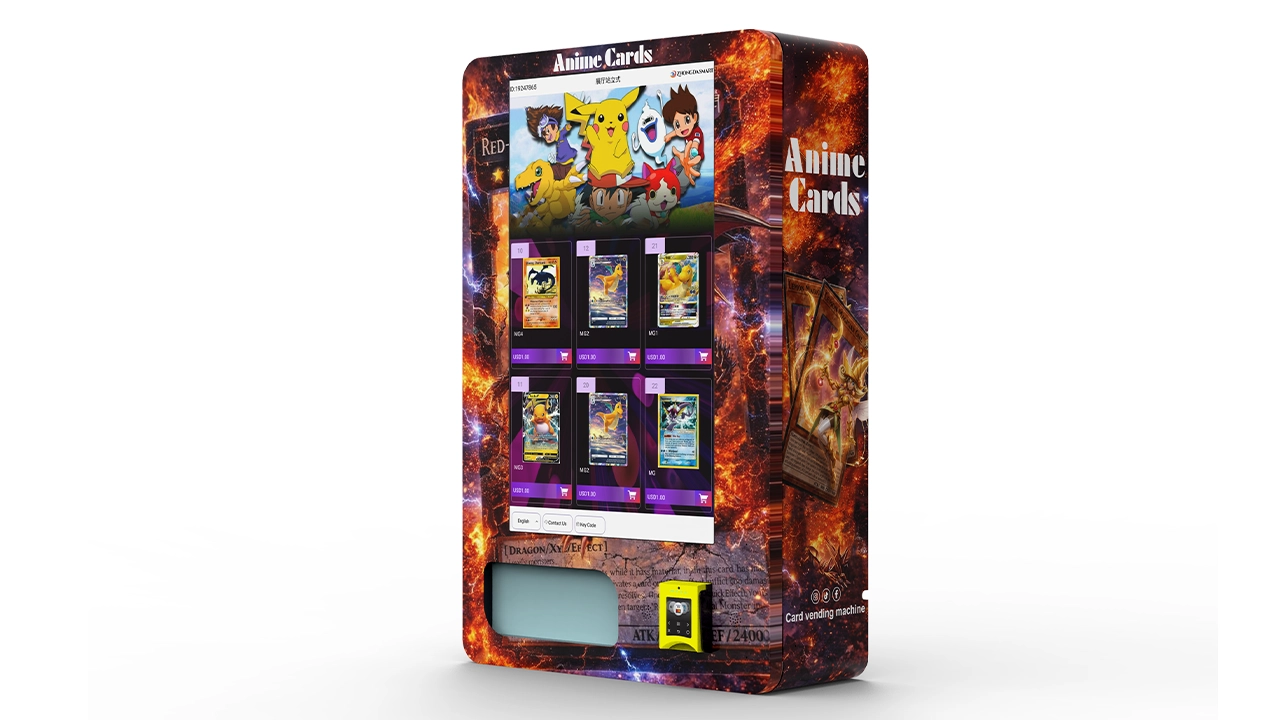
I’ve tracked my own operating costs across a dozen machines, and the all-in monthly cost per unit—excluding product—lands between $150 and $400. That includes amortized machine cost, rent, fees, and maintenance. If you don’t know this number before you sign a location agreement, you’re flying blind.
Revenue Realities: What I’ve Seen on Statements
Let’s get to the part everyone wants to know. A trading card vending machine in a solid location—think a hobby shop with regular foot traffic or a mall corridor near a comic store—can gross $800 to $2,500 per month. I’ve had one unit in a high-end hobby store do $3,400 in a single month during a Pokemon reprint wave. I’ve also had a machine in a laundromat that barely cleared $200, and I pulled it after eight weeks.
The gross margin on trading cards is usually 30% to 50%, which is solid for vending. But that margin only matters if the machine is actually selling. A machine that grosses $1,200 per month with a 40% margin gives you $480 before operating costs. Subtract $250 in fixed costs, and you’re left with $230. That’s not terrible, but it’s not the passive income story some sellers push.
Where the numbers get interesting is when you find a location that does $2,500 or more consistently. At that level, the same math gives you $750 after costs. That’s why I spend more time on location scouting than on product sourcing. The machine is the same; the location is the business.
The Failure That Taught Me More Than Any Success
I want to tell you about a machine I placed in a mid-sized card shop in a suburban strip mall. The owner had a loyal customer base, and the store was doing well. I assumed the foot traffic would carry the vending machine. It didn’t.
The problem was placement inside the store. The owner put the machine in the back corner near the play area, which seemed logical because that’s where the kids gathered. But the customers who actually bought cards were adults browsing the singles wall near the front. They never walked past the machine, and the kids who saw it didn’t have money or card-reading payment options. The machine sat there for three months averaging $400 per month. I was losing money on rent and restocking trips.
I moved the machine to the front counter area, right next to the register, and sales tripled within two weeks. Same store, same customers, same product. The only change was visibility. That lesson stuck with me: a trading card vending machine is an impulse purchase device, and impulse only works when the machine is in the line of sight.
What Makes a Location Profitable
I’ve developed a checklist over the years, and I don’t place a machine without running through it. Foot traffic is important, but it’s not the whole story. Here’s what I actually look for:
- Relevant foot traffic: A busy grocery store doesn’t help if the customers aren’t card buyers. A quiet comic shop with the right customers beats a busy supermarket every time.
- Dwell time: Places where people wait—laundromats, game stores, barbershops—tend to do better than places where people rush through.
- Existing card culture: Stores that already sell singles, host tournaments, or have a display case of sealed product are prime spots. The customers are already there.
- Lighting and visibility: The machine needs to be seen from the entrance or the main walkway. If it’s hidden, it’s dead weight.
- Owner engagement: A store owner who talks about the machine to customers can double your sales. An owner who ignores it will kill your revenue.
One of my best-performing machines sits in a hobby shop that runs weekly trading card tournaments. The owner points new players to the machine when they ask about booster packs. That one unit does about $2,800 a month, and I didn’t have to negotiate hard on rent because the owner wanted the foot traffic the machine brings.
Comparing Machine Types and Costs
Not all trading card vending machines are the same, and the type you choose affects your startup cost and your profit potential. Here’s a table based on what I’ve seen in real operations, not manufacturer claims:
| Machine Type | Initial Cost | Monthly Revenue Range | Best Use Case | Maintenance Burden |
|---|---|---|---|---|
| Wall-mounted card vending machine | $2,800–$4,500 | $400–$1,200 | Small shops, cafes, barbershops | Low, fewer moving parts |
| 32-inch touchscreen machine | $4,500–$7,000 | $800–$2,500 | Hobby stores, malls, game shops | Medium, screen issues possible |
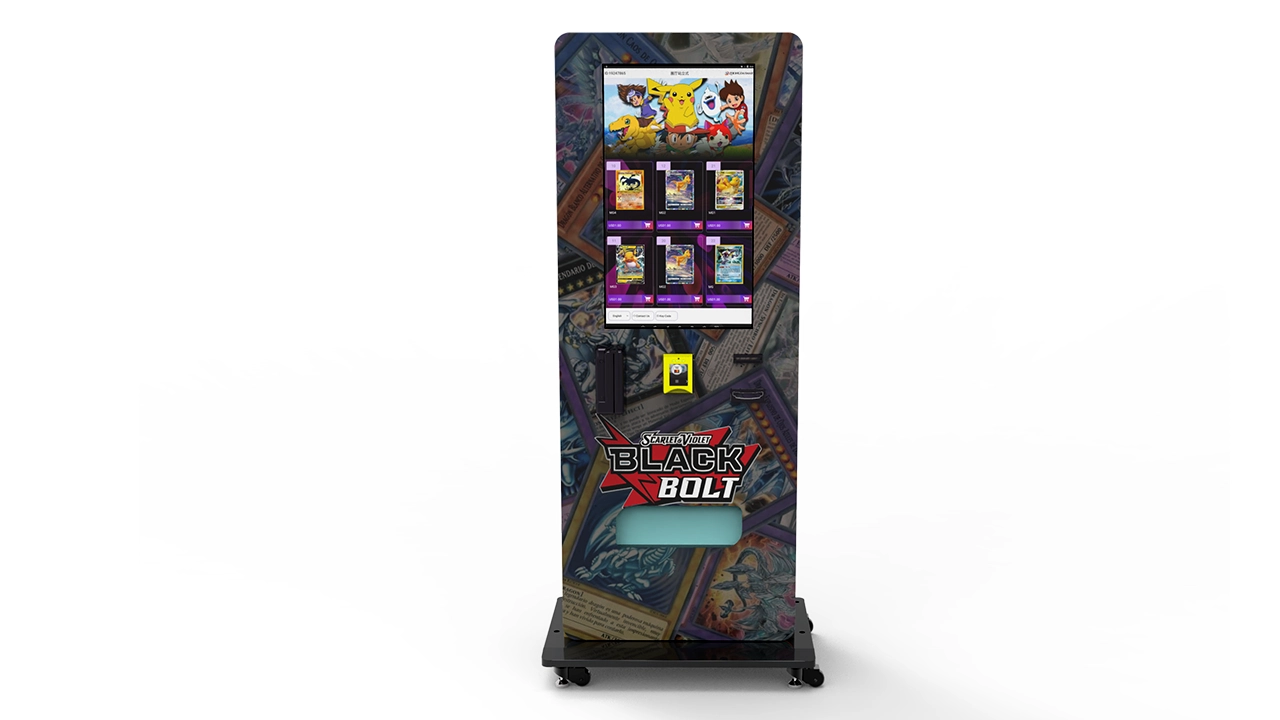
| Large floor-standing unit | $6,000–$9,000 | $1,500–$3,500 | High-traffic retail, entertainment venues | Higher, more inventory to manage |
I’ve used all three types. The wall-mounted units are great for testing a location without a huge investment, but they hold less product and sell out faster. The 32-inch touchscreen machines are my personal sweet spot—they draw attention, display the cards well, and the interactive element increases purchase intent. I’ve seen a 32-inch touchscreen trading card vending machine outperform a larger unit in the same mall because it looked more modern and the screen made the product pop.
Gross Margin vs. Net Profit: Don’t Confuse the Two
I’ve had conversations with new operators who think a 50% margin means they’re making 50 cents on every dollar. That’s not how it works. Gross margin is only the starting point.
Let’s walk through a realistic example. Say you have a machine that grosses $1,800 in a month. The product cost is around $1,080, leaving $720 in gross profit. Then you subtract:
- Location commission or rent: $150
- Payment processing fees: $54 (3% of gross)
- Maintenance reserve: $50
- Restocking labor (2 trips at 2 hours each): $60
That leaves you with $406 in net profit. That’s a 22% net margin, which is actually decent for vending. But if your location rent is $300 instead of $150, that drops to $256. And if the machine only grosses $1,200, you’re looking at $160 or less. That’s why I say the trading card vending machine business is a location business first and a product business second.
Supplier Selection: What I Learned the Hard Way
I bought my first machine from a broker who promised great support and then disappeared after the sale. The machine worked, but when the card reader failed, I had to find a local technician who charged me $180 just to diagnose the problem. That experience taught me to vet suppliers carefully.
When I’m evaluating a manufacturer or distributor, I ask about three things: spare parts availability, response time for technical issues, and whether they have a US or EU service network. I’ve worked with several manufacturers, and I keep coming back to Zhongda Smart because they actually stock spare parts and their support team responds within a day. That might sound like a small thing, but when your machine is down, every day of downtime is lost revenue. A supplier who can’t ship a replacement part quickly is costing you money even if their machine was cheaper upfront.
I also check whether the supplier offers remote diagnostics or software updates. A machine that can be troubleshot remotely saves you a service call, and that’s worth hundreds of dollars over the machine’s life.
Hidden Costs That Eat Your Margin
There are costs that don’t show up in a simple revenue projection, and they’re the ones that separate profitable operations from money pits. I’ve made these mistakes, and I’m sharing them so you don’t have to.
Product shrinkage: Cards are small and easy to steal. I’ve had machines where customers found ways to jam the dispensing mechanism and grab product without paying. You need a machine with good anti-theft design, and you need to check the dispensing area regularly. Shrinkage of 2%–5% is normal; anything more means a design problem.
Dead inventory: Trading cards have a shelf life. A hot set sells out in a week, but a set that doesn’t move sits in your machine for months. I’ve learned to rotate stock aggressively and mark down slow movers before they become worthless. Unsold inventory is not an asset; it’s a liability.
Payment system failures: Card readers and mobile payment modules fail more often than the vending mechanism itself. I keep a spare reader on hand and I’ve learned to swap them out myself. A vending machine repair call for a payment issue typically runs $100–$200, and that’s money you can save with basic DIY skills.
Seasonality: Trading card sales spike around new set releases and holidays, but they dip in summer when kids are out of school and spending money elsewhere. I budget for these swings so I don’t panic and make bad decisions during slow months.
Restocking and Inventory Management
How you handle restocking is a major factor in your actual profit margin. I’ve seen operators treat restocking as an afterthought, and it shows in their numbers. Every trip to a machine costs you time and gas, and if you’re not efficient, that cost eats your margin.
Here’s what works for me:
- Track sales data per machine: I know which products sell at each location. A machine near a school sells different products than one in a hobby shop.
- Restock on a schedule, not on demand: I visit every machine at least once every two weeks, even if it’s not empty. This lets me rotate stock and spot issues before they become problems.
- Keep a buffer of top sellers: I always carry extra of the top three products. Running out of a hot item is worse than overstocking a slow one.
- Use a simple inventory tracking system: I use a spreadsheet, not fancy software. I track what went in, what sold, and what’s left. That’s enough to make informed decisions.
One of my machines in a game store sells through a specific Pokemon booster box within three days of restocking. I’ve learned to allocate more space to that product and reduce the variety of slower items. That single adjustment increased the machine’s monthly revenue by about 30% without moving the machine an inch.
Buy, Rent, or Lease: Which Makes Sense for You
New operators often ask whether they should buy a machine outright or sign up for a leasing or revenue-share program. I’ve done all three, and the answer depends on your situation.
Buying outright gives you the most control. You own the asset, you keep all the revenue, and you can move the machine if a location underperforms. The downside is the upfront cost and the risk that you’ll pick the wrong machine or location.
Leasing reduces upfront cost but locks you into a monthly payment. I’ve seen leases that look cheap but include high interest rates or penalties for early termination. Read the fine print carefully.
Revenue-share arrangements with location owners are common in this industry. The owner provides space and sometimes power, and you split the gross. I’ve done 70/30 splits in favor of the operator, and 50/50 in high-traffic locations. The problem is that the location owner has no incentive to promote the machine if they’re getting a small cut. I prefer a flat rent or a split that gives the owner a meaningful share, because it aligns their interests with yours.
My general advice for a first-time operator is to buy a single, mid-priced machine and place it in a location you already have a relationship with. That minimizes risk and lets you learn the operational side without a huge financial commitment.
Scaling Up: When and How to Add More Machines
Once you have one machine running profitably, the temptation is to scale fast. I did that and regretted it. I added three machines in two months and ended up with two underperforming locations and a lot of stress. Scaling requires a repeatable process, not just capital.
Here’s what I recommend before you add a second machine:
- Your first machine has been profitable for at least six consecutive months.
- You have a restocking routine that doesn’t feel chaotic.
- You know your top-selling products and have reliable suppliers.
- You have a list of potential locations, not just one idea.
I also recommend starting with a wall-mounted card vending machine for a second location. It’s cheaper, easier to install, and lets you test a site without a big commitment. If it works, you can upgrade to a larger unit. If it doesn’t, you can move it with minimal loss.
Realistic Return on Investment Timeline
I’m going to give you a realistic payback period based on my own operations and those of operators I know. If you buy a machine for $6,000 and it nets $300 per month, that’s a 20-month payback. If it nets $500 per month, that’s 12 months. If it nets less than $200 per month, you’re better off selling the machine and cutting your losses.
According to IBISWorld, the vending machine industry in the US has seen steady growth, with operators reporting average profit margins around 15%–20% after all costs. That aligns with what I’ve seen in card vending specifically. The U.S. Small Business Administration also notes that equipment-based businesses typically take 12–18 months to reach steady profitability, and that matches my experience with card machines.
I’ve had machines that paid for themselves in eight months, and I’ve had one that took two years because the location was marginal and I was too stubborn to move it. The difference wasn’t the machine; it was the location and my willingness to make data-driven changes.
Common Mistakes I See New Operators Make
I’ve been doing this long enough to spot the patterns. Here are the mistakes that cost people the most money:
- Buying the cheapest machine: You get what you pay for. Cheap machines have higher failure rates and worse customer experience.
- Ignoring payment options: If your machine only takes cash, you’re losing the under-30 crowd. Card and mobile payments are essential.
- Poor product selection: Loading a machine with whatever you can get cheaply is a recipe for dead inventory. Buy what sells, not what’s available.
- Not negotiating with location owners: Rent is negotiable, especially if you can show the owner how the machine brings in customers. I’ve gotten rent reduced by 40% just by asking and offering data from other locations.
- Giving up too early: A machine that does poorly in the first month might do great in the third. Give a location at least 90 days before you pull it, unless it’s losing money catastrophically.
A Success Story: The Right Machine in the Right Spot
I want to end the operational part with a success story because it shows what’s possible when you get the fundamentals right. A friend of mine, who runs a small chain of comic shops, asked me to help him place a machine in one of his stores. He had the space, the customers, and the enthusiasm. The only thing he lacked was a machine.
We chose a 32-inch touchscreen model from Zhongda Smart, set it up near the counter, and loaded it with a mix of Pokemon, Yu-Gi-Oh, and sports cards. The first month grossed $1,900. By the third month, it was doing $2,600. The store owner promoted it to his regulars, and the machine became a talking point. That machine paid for itself in seven months and has been profitable ever since.
What made it work? The location had the right customers, the machine was visible, and the owner actively promoted it. That’s the formula. Everything else is details.
Legal and Compliance Considerations
You can’t just place a machine anywhere and start selling. Depending on where you operate, you may need a business license, a sales tax permit, and possibly a vending license. In the US, rules vary by state and municipality. In the EU, you’ll need to register your business and may need to comply with consumer protection and safety standards, especially if you’re selling to minors.
Trading cards are generally not regulated like food or medicine, but you’re still subject to standard business laws. I recommend checking with your local chamber of commerce or small business administration office before you buy your first machine. The cost of compliance is small compared to the cost of a fine or a shutdown.
I also recommend getting liability insurance. It’s usually affordable—around $300–$500 per year for a small operation—and it protects you if someone gets injured near your machine or if there’s a dispute over a transaction.
Final Thoughts on Profitability
The trading card vending machine profit margin is real, but it’s not automatic. I’ve seen operators make good money, and I’ve seen operators lose money because they skipped the homework. The difference is in location selection, product management, and operational discipline.
If you go into this expecting to set up a machine and watch money pile up, you’ll be disappointed. If you treat it like a small business—tracking numbers, adjusting to data, and building relationships with location owners—you can build a solid side income or even a full operation. The machines are tools, not magic boxes. It’s what you do with them that determines the outcome.
Disclaimer: The figures in this article are based on my personal operating experience and publicly available industry data. Actual results vary by location, product mix, and operational efficiency. I do not guarantee any specific profit or return on investment. Always conduct your own research and consult with a financial advisor before making significant investments.
Frequently Asked Questions
Are trading card vending machines profitable?
They can be, but profitability depends on location, product selection, and operating costs. In my experience, a well-placed machine can net $200–$700 per month after all costs. A poorly placed machine can lose money. I’ve seen both outcomes. The machine is only part of the equation; the location and the operator’s discipline matter more.
How much does a trading card vending machine cost?
A new machine typically costs between $3,500 and $8,000, depending on size, features, and payment systems. Wall-mounted units are cheaper, while larger touchscreen models cost more. Shipping, installation, and initial inventory add another $1,000–$2,000 to your startup cost.
How long does it take to recoup the investment?
Based on my operations, a realistic payback period is 12 to 18 months. If your machine nets $400 per month, a $6,000 investment pays back in 15 months. Faster payback is possible in high-traffic locations, but I wouldn’t count on it. The U.S. Small Business Administration notes that equipment-based businesses often take 12–18 months to reach steady profitability, which aligns with my experience.
Should a beginner buy or lease a machine?
I recommend buying a single, mid-priced machine to start. Leasing reduces upfront cost but adds monthly payments and can lock you into a contract. Buying gives you control and lets you move the machine if a location doesn’t work. Start small, learn the operational side, and scale when you have a proven process.
Where should I place the machine for the best results?
Look for locations with relevant foot traffic, dwell time, and an existing card-buying culture. Hobby shops, comic stores, game stores, and entertainment venues are my top picks. Avoid locations where people rush through, even if they have high foot traffic. Visibility inside the store is just as important as the store itself.
What permits or licenses do I need?
Requirements vary by location. In the US, you typically need a business license and a sales tax permit. Some municipalities require a vending license. In the EU, you’ll need to register your business and may need to follow consumer protection rules. Check with your local business authority before you start.
How do I choose a reliable machine supplier?
Ask about spare parts availability, response times for technical support, and whether they have a local service network. I’ve worked with Zhongda Smart and found their support reliable. A supplier who can quickly send parts or troubleshoot remotely is worth paying a little more for upfront.
What should I do if the machine breaks down?
Keep a basic toolkit and learn to troubleshoot common issues like payment reader failures or jams. Always have the supplier’s technical support number handy. For serious issues, you may need a local technician. A vending machine repair call typically costs $100–$200, so it’s worth learning basic fixes yourself.
How can I reduce restocking and maintenance costs?
Track sales data per machine to know what to stock and how much. Restock on a fixed schedule, not on demand. Keep spare parts for common failures. Choose machines with reliable components and good anti-theft design. These small efficiencies add up significantly over time.