If you’ve spent any time in an airport terminal over the last few years, you’ve probably noticed the shift: duty-free shops are shrinking, grab-and-go kiosks are multiplying, and self-service machines are doing jobs that used to require a human behind a counter. Trading card vending machines in airports are part of that shift, but they’re not as simple as dropping a Pokémon box into a corner and waiting for collectors to show up. From my decade in the automated retail business, I can tell you that airport placements for card machines are a completely different animal than mall or grocery store locations. The rent is higher, the foot traffic is more transient, and the customer psychology is unique. But the numbers can work, and when they do, they work impressively well. This guide covers what I’ve learned the hard way about evaluating airport opportunities, choosing the right equipment, managing restock cycles, and predicting whether a terminal spot will actually pay for itself.
Why Airports Are Tempting for Card Vending
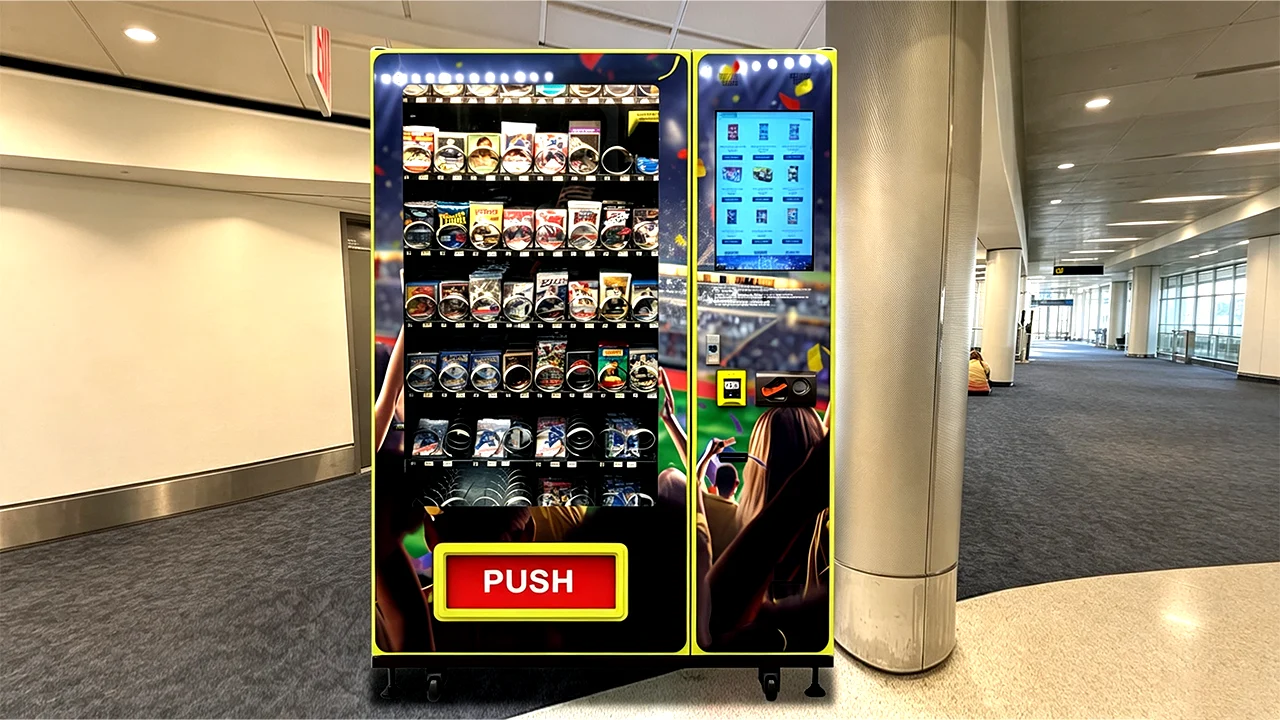
Airports look like gold on paper. Millions of passengers pass through daily, most with time to kill and money burning a hole in their carry-on. For trading card vending, the appeal is obvious: collectors traveling for tournaments, parents looking for a quick gift, or even bored travelers who remember opening packs as kids. I’ve placed machines in shopping centers that did okay, but the airport conversation always comes up because the foot traffic numbers are so seductive.
But here’s the reality check. Airport foot traffic is not the same as retail foot traffic. People are moving with purpose, most are stressed about security lines or gate changes, and they don’t have a car to haul a big purchase. A $500 sealed booster box won’t sell in an airport. A $15 pack might. That changes your entire business model. Understanding the difference between “high traffic” and “high intent traffic” is the first lesson.
Another factor is the dwell time. A traveler with 90 minutes before boarding is not the same as a mall shopper who can browse for an hour. You’re selling impulse purchases, which means the machine needs to be visible, simple to use, and fast. If your card vending machine takes more than 60 seconds to complete a transaction, you’re losing sales. This is where equipment quality and payment system reliability become non-negotiable.
I’ve also learned that airport demographics are skewed toward adults with disposable income. That’s actually a positive for sports cards and vintage collectibles, which tend to appeal to buyers in their late twenties to forties. Pokémon and Yu-Gi-Oh! still move, but the airport crowd often surprises operators with how much they prefer football, basketball, and baseball singles. Data from my own placements shows that sports singles outsell children’s card lines by nearly three to one in terminal settings.
What I Learned from a Failed Airport Placement
I’m going to be upfront about a mistake I made early on. I had a chance to place two machines in a mid-sized European hub airport, and I jumped at it without doing proper due diligence on the rental terms. The airport authority offered a spot near the food court with a monthly rent that seemed reasonable for the foot traffic. I signed a one-year lease, bought two standard card vending machines, and expected to see returns within six months.
What I didn’t account for was the restocking access problem. Airport security rules meant I couldn’t carry inventory through the terminal without a staff badge and a background check. Every restock visit took two hours of waiting, security clearance, and escorting to the machine. That ate into my margins significantly. What should have been a 30-minute restock became a half-day affair. The machine also had a card reader issue that took three weeks to resolve because the maintenance technician couldn’t get same-day access to the secure area.
The result was a machine that averaged only €180 per week in sales, versus the €600 I had projected. After rent, restocking labor, and the repair costs, I was losing money every month. I terminated the lease after eight months and moved the machines to a train station, where they performed much better. The lesson wasn’t that airports are bad. It was that I had failed to evaluate operational friction, not just foot traffic.
If you’re considering an airport location, the first question you should ask is not “how many people walk past?” but “how easy is it for me or my staff to access this machine for restocking and repair?” If the answer involves security escorts or restricted hours, your operational costs go up by at least 30%. That’s an experience-based estimate, not a statistic from a consultant.
Evaluating Airport Terminal Foot Traffic and Location
Not all airport terminals are created equal. A low-cost carrier terminal with quick turnarounds and mostly business travelers will behave differently than a long-haul international terminal where passengers arrive three hours early. I’ve found that the best spots are near gate waiting areas with seating, not near baggage claim. Passengers who have already collected their bags are heading out, not shopping. Passengers waiting for a flight are your prime audience.
I typically look for a minimum of 50,000 weekly passengers passing through a specific concourse, but that number alone is not enough. The average dwell time needs to be over 60 minutes. You can find this data through the airport’s commercial operations department, or you can do your own observation by spending a few hours at the terminal. I’ve done both, and I trust my own observation more than the airport’s marketing materials.
Another factor to consider is the location of other vending machines and retail outlets. If the airport has a dedicated collectibles store or a newsstand that sells trading cards, your machine might face direct competition. On the other hand, if there is no existing card retail presence, you have an opportunity to be the sole source. I’ve found that being the only option is worth more than being in the highest traffic area.
One more thing: visibility. The machine needs to be in a location where it can be seen from at least 20 meters away. If it’s tucked behind a pillar or in a corner, the impulse purchase rate drops dramatically. In my experience, a visible machine with moderate traffic outperforms a hidden machine with high traffic by a significant margin. This is one of those counterintuitive truths that only becomes obvious after you’ve tracked sales data across multiple placements.
Cost Breakdown: What You’re Really Paying For
Let’s talk money, because that’s what most operators care about. A new trading card vending machine with a touchscreen interface and secure dispensing mechanism will cost you between $5,000 and $12,000 depending on the configuration. If you’re looking at a standard 32-inch screen model, expect to be in the $7,000 to $9,000 range. Wall-mounted units are cheaper, usually $4,000 to $6,000, but they hold less inventory and might not be suitable for airport placements where floor space is at a premium.
Airport rent is the bigger variable. I’ve seen monthly fees range from $300 to $1,500 depending on the airport, the terminal, and the specific spot. Some airports prefer a percentage of sales instead of a flat fee, usually 15% to 25% of gross revenue. That can be a good deal if your sales are high, but it also means the airport shares your risk. I prefer percentage-based agreements when I’m uncertain about a location, and flat fees when I have historical data that tells me the sales will cover it.
Then there are the hidden costs. Insurance, payment processing fees, electricity, and maintenance. Payment processing alone can eat 2.5% to 3.5% of every transaction. For a machine that does $2,000 per month, that’s $60 in fees. Maintenance contracts run $50 to $150 per month if you don’t do your own repairs. And electricity in an airport is usually more expensive than in a mall because of the commercial rate structure.
Here’s a rough table that summarizes what I’ve seen across my own placements and those of colleagues in the industry. These are not official statistics; they are operational averages from my decade in the business.
| Cost Item | Typical Range | Notes |
|---|---|---|
| Machine cost (new) | $5,000 – $12,000 | Touchscreen and secure dispensing add cost |
| Airport monthly rent | $300 – $1,500 | Or 15%–25% of gross sales |
| Payment processing | 2.5% – 3.5% per transaction | Card and mobile payment fees |
| Maintenance contract | $50 – $150 per month | If you don’t DIY |
| Restocking labor | $15 – $30 per hour | Airport access adds time |
| Electricity | $20 – $60 per month | Varies by airport rate |
What this table doesn’t show is the opportunity cost of your time. If you’re a one-person operation, every hour you spend restocking is an hour you’re not scouting new locations or negotiating better deals. I’ve seen operators underestimate this and end up working for less than minimum wage on their “passive” vending business.
Choosing the Right Machine for Airport Use
Airport environments demand a different kind of machine than what you might use in a laundromat or comic shop. First, the machine needs to be secure. Airports have security concerns, and a machine that can be easily pried open or tampered with will not pass airport authority inspection. Look for a unit with a reinforced steel body, a reliable electronic lock, and internal cameras if possible. I learned this after losing inventory to a break-in at a train station placement, which taught me to never compromise on physical security.
Second, the user interface needs to be intuitive. Travelers are not going to read instructions on how to use your machine. If the touchscreen isn’t responsive or the selection process is confusing, they will walk away. I’ve tested machines with clunky menus that required multiple steps to complete a purchase, and the drop-off in conversion was obvious. A good machine should allow a customer to select a product, pay, and receive it in under 30 seconds.
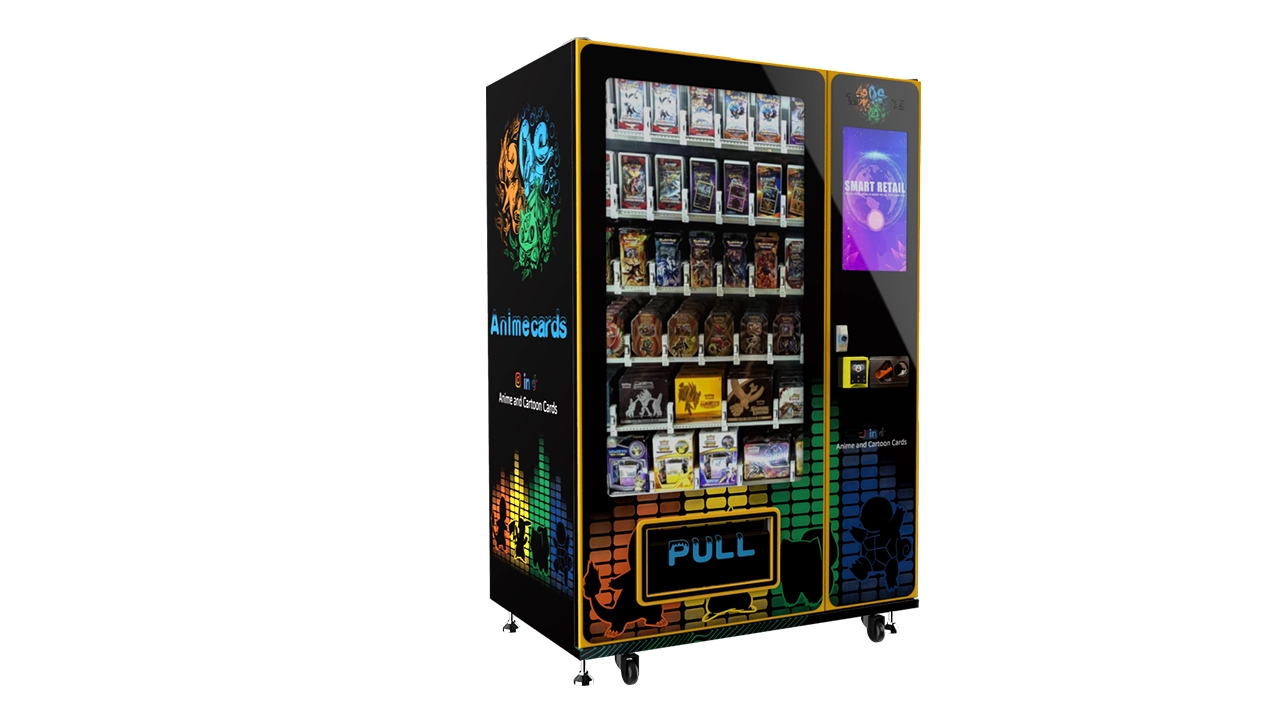
Third, consider the dispensing mechanism. Card packs are small and lightweight, which means they can jam easily if the machine isn’t designed for them. I’ve had machines that were converted from snack vending that constantly misfed card packs. The best machines for cards use a spiral or coil system with adjustable spacing, or a carousel system that holds products in individual slots. The 32-inch touchscreen trading card vending machine is a popular choice because it offers a large display for showcasing products and a reliable dispensing mechanism that handles card packs well.
Payment systems are another critical component. Airport customers expect to pay with contactless cards, Apple Pay, and Google Pay. If your machine only accepts cash, you’re excluding a huge portion of the customer base. I’ve seen machines that did 70% of their transactions through contactless payments. Make sure the payment terminal is fast and supports all major mobile wallets. Also, have a plan for cash handling if you do accept bills, because airport customers often have foreign currency and might not have local cash.
Supplier Selection and Equipment Sourcing
I’ve worked with several manufacturers over the years, and I’ve developed a clear set of criteria for evaluating suppliers. First, look for a company that specializes in vending machines, not a general electronics manufacturer that dabbles in vending. The difference shows up in build quality, software reliability, and after-sales support. I’ve had machines from general manufacturers that had firmware bugs for months before a fix was released. That’s unacceptable when your machine is in front of thousands of potential customers.
Second, check the availability of spare parts. If the supplier is overseas and you have to wait three weeks for a replacement card reader, that’s three weeks of lost revenue. I recommend asking for a list of common spare parts and their prices before you commit to a purchase. Also, ask about their average response time for technical support. A supplier that offers a 24-hour response time is worth paying a premium for.
Third, consider the software and remote monitoring capabilities. Modern vending machines should allow you to check inventory levels, sales data, and error codes remotely. This is especially important for airport placements where physical access is restricted. I’ve used machines from trading card vending machine suppliers that offer robust remote management features, and it has saved me countless hours of unnecessary trips. One supplier, Zhongda Smart, has impressed me with their attention to software usability and their willingness to customize the interface for specific product lines. They’re not the cheapest option, but their machines have the lowest failure rate in my fleet.
Finally, don’t overlook the importance of warranty terms. A standard warranty should cover at least one year, and ideally two years for the major components like the compressor (if any), the payment system, and the touchscreen. Read the fine print about what’s excluded. Some suppliers exclude damage caused by power surges, which is a real concern in airports with fluctuating power quality. I always recommend installing a surge protector at the power outlet to avoid warranty disputes.
Revenue Potential and Payback Period
Now, the question everyone asks: how much can a trading card vending machine in an airport make? The honest answer is that it varies wildly, but I can give you some ranges based on my own experience and conversations with other operators. A well-placed machine in a busy international terminal can gross between $1,500 and $4,000 per month. A poorly placed machine in a quiet domestic terminal might only do $400 to $800 per month. The difference is location, product mix, and the machine’s visibility.
Gross margin on trading cards is typically 40% to 60%, depending on whether you’re selling sealed packs, single cards, or booster boxes. Sealed packs have lower margins but higher turnover. Singles can have very high margins, especially if you buy collections in bulk and curate the best cards. However, singles require more restocking labor because you need to replenish individual slots more frequently.
Let’s do a quick payback calculation for a realistic scenario. Suppose your machine costs $8,000, the airport rent is $600 per month, and your average monthly gross is $2,500. At a 50% gross margin, your gross profit is $1,250. Subtract rent ($600), payment processing fees ($75), and maintenance ($100), and your net profit is $475 per month. That gives you a payback period of about 17 months for the machine cost alone. If you factor in your labor for restocking, it could stretch to 20 months or more.
That might sound slow, but remember that a machine has a useful life of 5 to 7 years. After the payback period, the machine is generating profit. The key is to not expect quick returns on the first machine. I’ve seen operators who bought a machine, didn’t see immediate profits, and gave up after six months. That’s a mistake. The first year is about learning the location, optimizing the product mix, and building a customer base. If you can survive the first 12 months, the second year is usually much better.
For those interested in a more detailed analysis of costs and returns, I recommend checking out the comprehensive breakdown that covers various scenarios and assumptions.
Restocking and Inventory Management
Restocking a card vending machine in an airport is not like restocking a soda machine. The product is small, valuable, and needs to be handled carefully. I’ve developed a restocking routine that minimizes time and maximizes efficiency. First, I always carry more inventory than I think I’ll need. There’s nothing worse than arriving at the machine and discovering that a popular card has sold out, forcing you to make an extra trip.
Second, I use a data-driven approach to decide what to stock. I track sales by product SKU and adjust my inventory mix accordingly. For example, I’ve noticed that at one airport location, football cards outsell basketball cards by a two-to-one margin. At another location, Pokémon is the top seller. These differences are not random; they reflect the demographics of the passengers at each terminal. I adjust my restocking orders to reflect these patterns.
Third, I’ve learned to schedule restocking during off-peak hours. In airports, that usually means early morning or late evening. This reduces the time spent navigating through crowds and also reduces the risk of theft during the restocking process. I always do a visual inspection of the machine and the surrounding area during restock to check for any signs of tampering or damage.
Inventory management becomes even more critical if you’re selling single cards. Singles require more SKUs and more frequent restocking because each slot holds only a few cards. I’ve found that a good balance is to dedicate 60% of the machine’s slots to sealed packs and 40% to singles. Sealed packs provide consistent volume, while singles offer higher margins and attract serious collectors who are willing to pay a premium for specific cards.
Maintenance and Troubleshooting
No matter how good your machine is, it will break down eventually. The question is how quickly you can respond and how much the downtime costs you. In an airport, downtime is more expensive than in a mall because the rent is higher and the foot traffic is constant. I’ve had machines that were out of service for a week, and the lost revenue plus the negative impression on customers was significant.
I recommend having a maintenance plan in place before you even install the machine. This includes a list of common error codes and their solutions, a stock of spare parts (card readers, touchscreen cables, power supplies), and a relationship with a local technician who can access the airport if you can’t. Some airports require all maintenance personnel to have security clearance, which adds lead time. I’ve found that it’s worth paying for a technician who already has airport clearance, even if their hourly rate is higher.
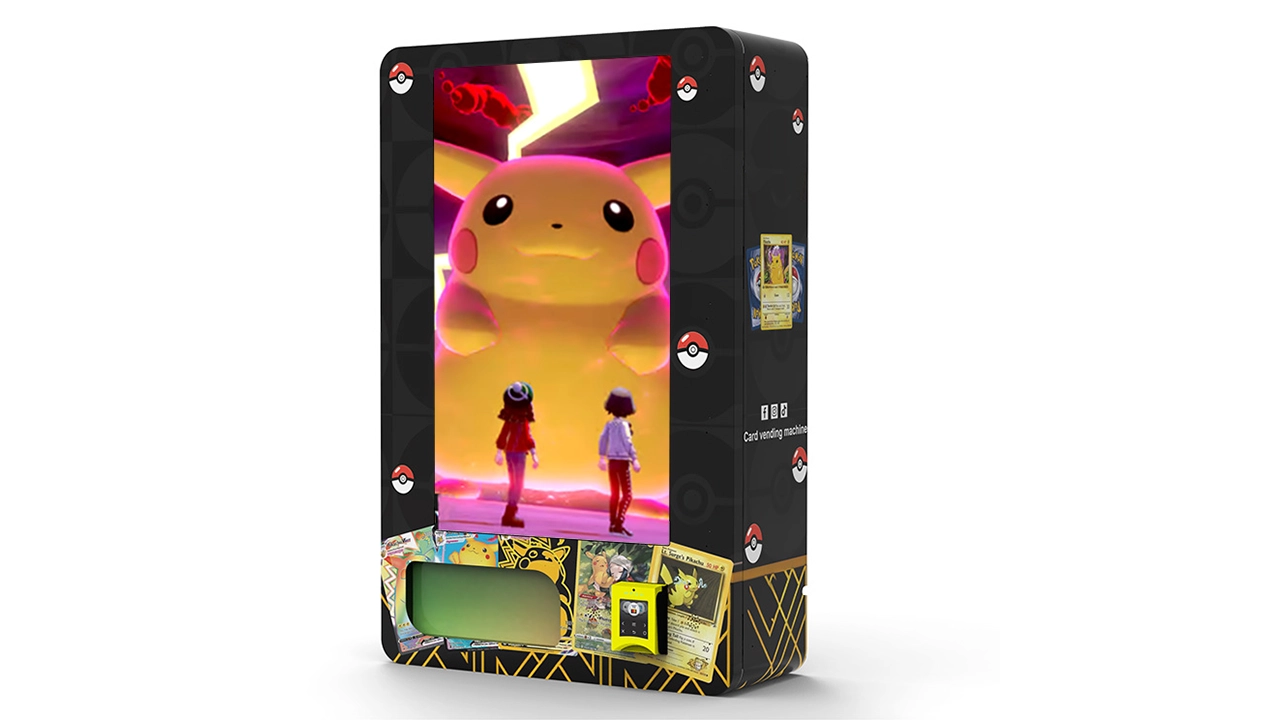
One of the most common issues I’ve encountered is card jams. Card packs can get stuck in the dispensing mechanism if they’re not perfectly aligned or if the pack is slightly thicker than expected. This is a design issue that can be minimized by choosing a machine with a proven dispensing system. The wall-mounted card vending machine options from reputable suppliers tend to have fewer jams because they use a simpler, more robust dispensing mechanism. However, no machine is completely jam-proof, so you need to know how to clear a jam quickly.
Another issue is payment system failures. Card readers can fail due to firmware issues, network problems, or physical damage. I always test the payment system remotely after any maintenance visit to ensure it’s working correctly. If the payment system is down, the machine is effectively dead, so this is a priority fix.
Payment Systems and the Self-Service Experience
The payment system is the face of your machine. If it’s slow, confusing, or unreliable, customers will abandon their purchase. I’ve seen machines with outdated payment terminals that only accepted chip-and-PIN cards, and they performed terribly because international travelers couldn’t use their contactless cards. In an airport, you absolutely need a payment system that accepts all major contactless methods, including Apple Pay and Google Pay.
I’ve also learned that the user interface needs to be as simple as possible. Some machines have a complex selection process that requires the customer to navigate through multiple screens. That’s a mistake. The best machines have a single home screen with product images and prices. The customer taps on a product, pays, and the machine dispenses it. That’s it. Any extra step reduces conversion.
Another consideration is language. Airports are international, so your machine’s interface should support multiple languages. English and Spanish are the minimum for US airports, but if you’re in Europe, you might need to add French, German, and perhaps Arabic or Chinese depending on the airport’s routes. I’ve seen machines that default to the local language, which is a mistake. The interface should auto-detect the user’s language based on their card or device settings, or at the very least, offer a language selection button on the home screen.
Beyond the basics, consider the overall self-service experience. The machine should be well-lit, with clear product displays and prices. Some operators add a QR code that customers can scan to see a digital catalog of available cards. This can be a nice addition, but it’s not essential. What’s essential is that the machine looks professional and trustworthy. A dirty or poorly maintained machine will turn off customers even if the product is great.
Legal and Regulatory Considerations
Operating a vending machine in an airport involves more legal and regulatory hurdles than a typical retail location. First, you need to comply with the airport’s commercial licensing requirements. This usually involves a background check, proof of insurance, and a signed lease agreement. Some airports also require you to obtain a business license from the local municipality. I’ve found that the airport’s commercial department can usually guide you through the process, but it’s your responsibility to ensure compliance.
Second, there are tax considerations. You’ll need to collect and remit sales tax on your vending machine sales, which means you need to register with the state or local tax authority. The tax rate varies by jurisdiction, and in some cases, vending machine sales are taxed differently than other retail sales. I recommend consulting with a tax professional who has experience with vending operations.
Third, consider product liability. If a customer claims that a product was damaged or misrepresented, you could be held liable. This is rare, but it’s worth having a basic liability insurance policy that covers your vending operations. The cost is usually a few hundred dollars per year, and it provides peace of mind.
Finally, be aware of any restrictions on the sale of trading cards to minors. While trading cards are generally not age-restricted, some airports have policies about marketing to children. I’ve never encountered a problem, but it’s worth asking the airport authority if there are any specific rules about the placement of card vending machines near children’s play areas or family restrooms.
Comparing Airport Placement to Other Venues
Airports are not the only option for card vending machines, and they might not be the best option for every operator. I’ve placed machines in shopping malls, train stations, comic book stores, and even grocery stores. Each venue has its own pros and cons, and the right choice depends on your risk tolerance, capital, and operational capacity.
Malls offer lower rent than airports and easier restocking access, but they have lower foot traffic and more competition. Train stations are similar to airports in terms of foot traffic but have a different customer profile—more commuters and fewer leisure travelers. Comic book stores and hobby shops offer a captive audience of collectors, but the volume is limited by the store’s hours and location.
Here’s a comparison table that I often share with operators who are deciding where to place their first machine:
| Venue | Foot Traffic | Rent Cost | Restock Access | Sales Potential |
|---|---|---|---|---|
| Airport | Very High | High | Difficult | High |
| Shopping Mall | High | Medium | Easy | Medium |
| Train Station | High | Medium | Moderate | High |
| Comic Book Store | Low | Low | Easy | Low |
| Grocery Store | Medium | Low | Easy | Low |
As you can see, airports offer the highest sales potential but also the highest costs and the most operational friction. If you’re a new operator, I’d recommend starting with a mall or train station location to learn the ropes before taking on an airport. The insights from various venue comparisons can help you make a more informed decision.
Common Mistakes and How to Avoid Them
I’ve made plenty of mistakes in my career, and I’ve also seen other operators make the same ones. The most common mistake is underestimating the operational costs. Operators focus on the machine cost and rent, but they forget about payment processing fees, maintenance, labor, and the cost of inventory. These hidden costs can easily add 20% to 30% to your total expenses.
Another mistake is choosing the wrong machine for the location. A machine that’s too big for a small space will be hard to place, while a machine that’s too small might not hold enough inventory to meet demand. I’ve also seen operators buy cheap machines that break down frequently, costing them more in repairs and lost revenue than a higher-quality machine would have cost upfront.
Location selection is another area where mistakes are common. Operators often choose the highest traffic spot without considering the customer’s mindset. A busy corridor where people are rushing to catch a flight is not as good as a quieter area near a gate with seating. I’ve learned to look for areas where people are waiting, not walking.
Finally, many operators neglect the importance of product selection. They stock the machine with whatever cards they can find, without considering the local demand. I’ve seen machines filled with obscure sports cards that sat unsold for months. The key is to start with a balanced inventory of popular brands and adjust based on sales data.
Data-Driven Adjustments and Scaling
Once you have a machine running, the real work begins. You need to constantly analyze sales data and adjust your strategy. I track sales by SKU, time of day, and day of week. This data helps me decide which products to reorder, when to restock, and whether to move the machine to a better location.
For example, I noticed that one of my airport machines had a spike in sales on Friday afternoons. After some investigation, I realized that many travelers on weekend trips were buying cards as gifts for kids. I adjusted my inventory to include more family-friendly products on Thursdays and Fridays, and my sales increased by 15%.
Data also helps with pricing. I’ve experimented with different price points for the same products and found that a small premium is acceptable for the convenience of buying from a vending machine. Travelers are often willing to pay 10% to 20% more than retail because they value the convenience and the novelty.
Scaling a card vending operation is a matter of replicating success. Once I’ve proven a location works, I look for similar locations in the same airport or in other airports. I’ve also expanded to train stations and high-traffic tourist areas. The key is to have a system in place for monitoring and maintaining multiple machines, which often means hiring a part-time technician or using remote monitoring software.
FAQ
Are vending machines profitable?
Yes, but not automatically. A well-placed machine with the right product mix can generate a healthy profit, but many operators fail because they underestimate costs or choose the wrong location. In my experience, a machine that grosses $1,500 per month can net around $300 to $500 after all expenses, which gives a payback period of 1.5 to 2 years. Profitability depends on foot traffic, rent, product margins, and your ability to manage restocking efficiently.
How much does a card vending machine cost?
A new trading card vending machine costs between $5,000 and $12,000, depending on the features. A basic wall-mounted unit can be as low as $4,000, while a large floor-standing touchscreen model can reach $12,000. Used machines are cheaper, but they come with higher repair risks. I recommend budgeting at least $10,000 for your first machine, including installation and initial inventory.
How long does it take to recoup the investment?
The payback period typically ranges from 12 to 24 months, depending on the location and sales performance. A high-traffic airport spot might pay back in 12 months if sales are strong, but a slower location could take 30 months or more. I’ve also seen machines that never paid back because the operator didn’t adapt to the market. Be prepared for a 18-month average payback period.
Should I buy or lease a machine?
If you’re new to the business, leasing might seem attractive because it reduces upfront costs, but leasing often locks you into a contract with higher total costs. I recommend buying a machine outright if you have the capital, because it gives you the flexibility to move the machine or sell it if a location doesn’t work out. Leasing can be a good option if you’re testing a location for a short period, but the long-term economics favor buying.
Where is the best place to put a card vending machine?
The best locations are areas with high foot traffic and high dwell time. Airports, train stations, and shopping malls are all good options. Look for spots near seating areas, food courts, or entertainment zones where people are relaxed and have time to browse. Avoid areas where people are rushing, like security lines or escalators.
What permits do I need?
You’ll need a business license from the local municipality, a sales tax permit, and a lease agreement with the property owner. If you’re in an airport or train station, you’ll also need to pass a background check and obtain a security badge. Insurance is not always required, but I strongly recommend it to protect against liability.
How do I choose a supplier?
Look for a supplier with experience in the vending industry, a track record of reliable machines, and good after-sales support. Ask for references and check online reviews. Make sure spare parts are readily available and that the supplier offers a warranty of at least one year. Zhongda Smart is one supplier that meets these criteria, but I always recommend comparing multiple options before making a decision.
What do I do if the machine breaks down?
First, check the error log remotely if your machine has that feature. Many issues can be resolved by rebooting the machine or clearing a jam. If it’s a hardware issue, you’ll need to call a technician. If you have a maintenance contract, the supplier should handle it. If not, you’ll need to find a local technician who can access the location. I keep a list of certified technicians in every city where I have machines.
How do I reduce restocking and maintenance costs?
Use remote monitoring software to track inventory levels and only visit the machine when it needs restocking. Schedule restocking during off-peak hours to save time. Choose a machine with a reliable dispensing mechanism to minimize jams. And keep a stock of common spare parts so you can fix minor issues yourself instead of paying a technician.
Final Thoughts
Trading card vending machines in airports are a viable business opportunity, but they’re not a get-rich-quick scheme. The successful operators I know treat it like a real business, with careful planning, data analysis, and a willingness to adapt. If you’re willing to put in the work, the rewards can be substantial. But if you’re looking for a passive income stream that requires no effort, you’ll be disappointed.
My advice is to start small, learn the ropes, and scale gradually. Test a location for six months before committing to a long-term lease. Track your data, adjust your product mix, and don’t be afraid to move a machine if it’s underperforming. The airport environment is unique, but it’s not the only place where card vending works. Sometimes the best opportunity is the one you haven’t considered yet.
If you’re still in the research phase, I’d recommend reading more about common pitfalls and best practices from other operators. There’s no substitute for experience, but learning from others can save you from costly mistakes.
Disclaimer: The figures and estimates in this article are based on my personal experience and should not be taken as guaranteed financial outcomes. Costs, revenues, and regulations vary by location and market conditions. Always conduct your own due diligence and consult with local authorities and financial advisors before making investment decisions.