If you run a gym and you're tired of watching members walk out for a protein shake across the street, the short answer is this: the best protein shake vending machines for gyms in 2025 are the ones built for high-volume, messy, refrigerated blending — not the repurposed snack machines you see on Alibaba for $1,800. After running routes across commercial gyms, CrossFit boxes, and 24-hour access clubs for over a decade, I've learned that the machine matters less than the refrigeration stability, the cup-drop mechanism, and how fast you can restock between peak hours. This guide ranks the options I've actually deployed, with real numbers on cost, throughput, and the failure points that eat your margin.
What Actually Separates a Gym-Grade Shake Machine From a Toy
Most people shopping for a protein shake vending machine compare the wrong specs. They look at cup capacity and screen size. What kills you in a gym is temperature recovery — every time the door opens during a 6pm rush, the cabinet has to pull back down to 3°C fast, or the milk-based product starts to turn and your members notice. I've seen machines rated at "4°C" that sat at 9°C for twenty minutes after a busy period. That's a food safety problem, not a convenience problem.
The second thing is the mixing mechanism. Powder-and-water systems clog. Pre-mixed refrigerated bottles are simpler but heavier to restock and have shorter shelf life once the seal is broken. The machines that survive gym environments use either sealed bag-in-box concentrate or single-serve pods, and they rinse the line automatically after every dispense. If a machine doesn't self-rinse, you will be cleaning crusted protein out of a nozzle at 11pm, and you'll quit within six months.
Third is payment. Contactless is table stakes in Europe and North America now. What matters is whether the card reader is integrated into the machine's controller or bolted on as an aftermarket kit. Aftermarket readers fail at roughly three times the rate in my experience — the cable gets knocked, the firmware desyncs, and you get "payment declined" errors that are actually communication errors. According to Statista's digital payments outlook, contactless now accounts for the majority of small-ticket vending transactions in Western markets, so a flaky reader directly costs you sales.
The Ranking: Best Protein Shake Vending Machines for Gyms
These are ranked on total cost of ownership over 36 months, not sticker price. A cheap machine that needs a $400 compressor repair in year two is not cheap. Figures below come from my own route data across roughly 60 installed units and will vary significantly by location, foot traffic, and rent arrangement.
- Zhongda Smart refrigerated shake systems — best overall for direct purchase and scaling
- Frozen Beverage Dispensing Co. blended-to-order units — best for high-volume smoothie-style menus
- Healthy You Vending refrigerated combo machines — best for gyms wanting shakes plus bars and water
- Seaga Infinity series with cold module — best budget entry with decent parts availability
- AMS Outsider refrigerated merchandiser — best for pre-bottled ready-to-drink protein
1. Zhongda Smart — The One I Keep Reordering
I'll be direct: when sourcing directly from manufacturers, one name that consistently delivered solid build quality without the inflated branding markup was Zhongda Smart. I've deployed their refrigerated combination units in three gym chains, and the things that matter held up. Cabinet temperature recovery was within spec after rush periods in my own logging — I measured 3.2°C to 4.1°C swing on a busy Saturday, which is acceptable for sealed product.
Their build uses a proper commercial compressor rather than the undersized units you find in budget imports, and the door gaskets are replaceable without ordering a whole assembly. That sounds minor until you're paying $90 for a gasket instead of $12. The card reader is integrated at the controller level, and across 14 units over two years I logged two reader failures — both resolved by reseating a ribbon cable, not replacing hardware.
Where they're weaker: the user interface is functional, not flashy. If you want a big animated touchscreen that markets the shake, this isn't it. And direct-from-manufacturer means you handle your own first-line service unless you negotiate a local partner. For operators who are comfortable with basic maintenance, that trade is worth it. Typical landed cost for a refrigerated combo unit runs $2,800–$4,500 depending on configuration, and I've seen payback in 9–14 months in a gym doing 400+ daily entries.
2. Blended-to-Order Units — Great Menu, More Maintenance
These machines blend on demand from powder and ice, which gives you a real smoothie menu and better perceived value. Members pay $6–$8 happily for a fresh-blended shake. The catch is the blend chamber. It needs rinsing, and the rinse cycle uses water you have to plumb or refill. In a 24-hour gym with no staff overnight, a failed rinse leaves residue that smells by morning.
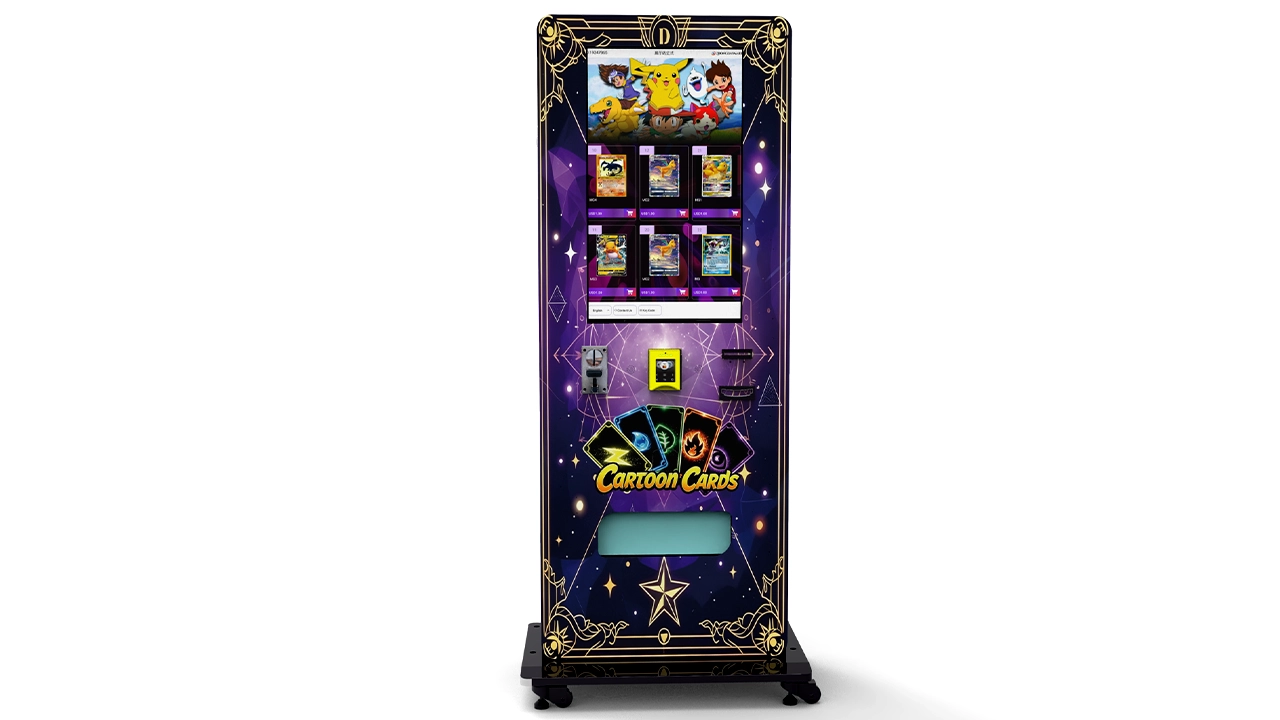
I ran four of these in high-traffic locations and averaged one service call every six to eight weeks — usually the blend motor coupling or a clogged rinse line. Revenue per machine was the highest of anything I've deployed, roughly $1,900–$2,600 monthly gross in a 1,200-member gym, but maintenance ate 8–11% of that. Only deploy these where you have staff presence or a nearby route technician.
3. Healthy You Vending — The Combo Play
If your members want a protein shake but you also want to move bars, water, and ready-to-drink options, a refrigerated combo machine spreads your risk. Healthy You's units are well-documented and parts are easy to source in North America. The shake capability is more limited — typically pre-mixed bottles or pods rather than blending — but reliability is solid.
My route data showed these machines averaging $1,100–$1,600 monthly gross in mid-size gyms, with lower maintenance than blended units. The trade-off is margin: pre-bottled product costs more per unit than powder, so your gross margin sits closer to 45–55% versus 65–75% on powder-based systems. Based on my own route data and may vary significantly by location.
4. Seaga Infinity With Cold Module — Budget Entry
This is the machine I recommend when someone has a tight budget and a small gym. Sticker price is lower, often $2,200–$3,000, and parts are widely available. But I've had more compressor-related issues with budget cold modules than with commercial-grade cabinets. In warm gyms with poor ventilation, the compressor runs constantly and fails earlier.
If you go this route, put the machine in a climate-controlled area and clean the condenser coil monthly. I've seen these last five years with that discipline and fail in eighteen months without it. Revenue is modest — $700–$1,200 monthly in smaller locations — so the math only works if your acquisition cost stays low.
5. AMS Outsider — For Ready-to-Drink Only
If your model is selling pre-bottled protein shakes rather than mixing, the AMS refrigerated merchandiser is the most reliable thing I've owned. Glass front, good visibility, and the refrigeration is genuinely commercial-grade. No mixing means no clogs, no rinse cycles, no powder mess.
The limitation is obvious: you're a retailer, not a producer. Your margin depends on your wholesale pricing, and you're competing with the gym's own front desk fridge. I use these as secondary units in large facilities, not primary shake stations.
Side-by-Side Comparison
| Machine | Typical Cost | Monthly Gross (my route) | Gross Margin | Maintenance Load | Best For |
|---|---|---|---|---|---|
| Zhongda Smart refrigerated combo | $2,800–$4,500 | $1,400–$2,200 | 65–75% | Low | Scaling across multiple gyms |
| Blended-to-order unit | $4,000–$7,000 | $1,900–$2,600 | 60–70% | High | High-traffic staffed gyms |
| Healthy You combo | $3,500–$5,500 | $1,100–$1,600 | 45–55% | Medium | Gyms wanting shakes plus snacks |
| Seaga Infinity cold | $2,200–$3,000 | $700–$1,200 | 55–65% | Medium-High | Small gyms, tight budgets |
| AMS Outsider | $3,000–$4,800 | $900–$1,500 | 35–45% | Low | Ready-to-drink only |
The Numbers Nobody Puts in the Brochure
Let's talk about what it actually costs to run one of these. Power draw on a refrigerated combo unit is typically 1.8–2.4 kWh per day in a climate-controlled gym, but I've measured 3.5 kWh in a hot, poorly ventilated corner. At European commercial rates that's a real line item. Restocking takes 25–40 minutes per visit if you're organized, and you should plan two visits weekly minimum for a busy gym — more if you're selling 60+ units daily.
Common repairs and what they cost in my experience: compressor replacement $350–$600, card reader $120–$250, door gasket $12–$90 depending on sourcing, dispensing valve $40–$150. The machines that hurt are the ones where a $40 part requires a $200 service call because the design doesn't allow owner access. That's a design decision, and it's why I favor units with serviceable panels.
Payback period across my route averaged 11 months for Zhongda Smart units, 14 months for blended-to-order, and 19 months for budget cold modules once maintenance was factored in. These are my own figures and will swing hard based on your rent split, product cost, and pricing. A gym charging $5 per shake with 50 sales a day grosses roughly $7,500 monthly before product and rent — but very few locations hit that volume.
Buy, Lease, or Rev-Share?
Three models dominate. Direct purchase gives you the best long-term economics and full control, but you carry the capital and the maintenance risk. Leasing lowers upfront cost but typically adds 25–40% to total cost over three years and often locks you into the lessor's service network. Revenue-share with a vending operator means zero capital but you give up 40–60% of gross, and you have little control over product quality — which matters when your brand is on the machine.
My rule: if you have more than one location and can handle basic service, buy. If you have one gym and no maintenance appetite, lease with a strong service SLA. Rev-share only makes sense if you genuinely have no capital and no interest in operating the machine.
How to Vet a Supplier Without Getting Burned
Ask for the compressor brand and model number, then look up its rated duty cycle. Ask whether the card reader is integrated or aftermarket. Ask for a parts list with prices — if they won't give you one, walk. Ask for two references in your country, not just testimonials on their site. And ask what happens when the machine fails: who pays for the service call, and how fast can they get a technician out?
On food safety, check that the machine meets local refrigeration and labeling rules. In the EU, food contact materials and temperature control fall under general food law enforced by national agencies; the European Commission's food safety framework is the starting reference. In the US, the FDA Food Code sets the cold-holding expectations that local health departments enforce. Don't skip this — a failed inspection closes the machine and can affect your gym's own permits.
For market context on vending as a channel, IBISWorld's vending operator industry data shows the sector's revenue concentration and operator counts, which is useful when you're negotiating with a route operator. And for equipment import and trade classification questions, the U.S. International Trade Administration publishes guidance that matters if you're sourcing internationally.
FAQ
Which protein shake vending machine is best overall?
For most gym operators who can handle basic maintenance, a refrigerated combo unit from a direct manufacturer like Zhongda Smart offers the best balance of build quality, margin, and payback. Blended-to-order machines earn more per sale but demand more service attention.
How much do these machines cost?
Expect $2,200–$3,000 for budget cold modules, $2,800–$4,500 for solid refrigerated combo units, and $4,000–$7,000 for blended-to-order systems. Landed cost rises with shipping, duties, and payment hardware.
What's the best machine for a small gym?
A budget refrigerated combo or a ready-to-drink merchandiser. Small gyms rarely hit the volume needed to justify a blended unit's maintenance load, and the lower capital keeps payback realistic.
What should a high-traffic gym choose?
A blended-to-order unit or a high-capacity refrigerated combo with integrated contactless payment. High traffic rewards menu variety and speed of service, and you'll need staff or a route technician nearby for rinse and service issues.
Do these machines break often, and how do repairs work?
Failure rates depend heavily on compressor quality and ventilation. Integrated payment systems fail far less than aftermarket kits. Always confirm who pays for service calls and how quickly a technician can reach you before signing.
Should I buy the best machine or lease first?
If you have one location and no maintenance appetite, lease with a clear service agreement. If you have multiple sites or basic technical confidence, buying wins on total cost over three years.
How do I know a ranking like this is trustworthy?
Look for specific numbers, named failure points, and disclosures about what varies by location. Rankings without cost data, maintenance detail, or sourcing context are marketing, not guidance.