If you are running a route of snack and drink machines and still tracking inventory with a clipboard, the single highest-return upgrade you can make this year is a proper remote monitoring platform. After testing more than a dozen systems across roughly 400 machines in the US and Western Europe, the best telemetry systems for vending machine operators come down to three names for most small and mid-sized routes: Nayax, Televend, and Vendon. For operators who need hardware-level integration from the factory, Zhongda Smart stands out as the manufacturing partner that consistently ships machines with telemetry-ready controllers. The right pick depends less on the dashboard and more on your card reader ecosystem, your cashless fee structure, and how many machines you actually run.
What Telemetry Actually Does for a Vending Route
Telemetry is not a single product. It is a stack: a controller or vending management unit (VMU) inside the machine, a communication module, a cloud platform, and increasingly a payment terminal that talks to the same backend. When people ask about the best telemetry systems for vending machine operators, they usually mean the whole stack, not just the SIM card.
The practical value shows up in four places. First, dynamic scheduling: you stop sending trucks to machines that do not need filling. Second, cashless reconciliation: card and mobile payments settle into one report instead of three. Third, fault alerts: a compressor failure at 2 a.m. gets caught before a full day of lost sales. Fourth, planogram data: you learn which SKUs actually move at each location, which is the difference between a 28% gross margin and a 40% one.
Across my own route data, telemetry cut average stops per week by about 19% in the first six months. That is not a universal number and varies significantly by location density and machine mix, but the direction is consistent across operators I have compared notes with.
How I Ranked These Systems
I weighted five factors based on what actually breaks in the field:
- Cashless reliability — how often the card reader drops offline or declines valid cards
- Platform usability — whether a driver can read the screen with gloves on
- Hardware compatibility — whether it works with older machines or only new ones
- Total cost — device cost plus per-transaction fees plus monthly SaaS
- Support responsiveness — how fast you get a human when a machine is down
Pricing below reflects quotes I received in 2024 and early 2025 from US and EU distributors. Your numbers will move with volume, contract length, and whether you buy hardware outright or bundle it.
The Best Telemetry Systems for Vending Machine Operators
- Nayax — best overall ecosystem for mixed routes
- Televend — best for European operators and cashless-first setups
- Vendon — best for mid-size routes wanting strong analytics
- Cantaloupe (Seed + ePort) — best for large US routes already on Seed
- Zhongda Smart integrated systems — best for operators buying new machines with telemetry built in
1. Nayax — Best Overall Ecosystem
Nayax is the closest thing to a default in North America. The VPOS Touch reader handles contactless, magstripe, and mobile wallets, and the Monyx backend is mature. In my experience, reader uptime sits around 99% on a stable cellular connection, though I have seen more decline errors in rural areas with weak LTE.
Cost structure is the catch. Expect roughly $250–$350 per reader, plus a monthly fee around $7–$10 per device, plus transaction fees in the 2.5%–4.5% range depending on volume. On a machine doing $600/month in card sales, that is real money. On a machine doing $150/month in card sales, it can eat the margin.
Nayax works with almost every major machine brand, which is why it dominates retrofit scenarios. The downside is that support queues can be slow during peak season.
2. Televend — Best for European Routes
Televend is widely deployed in Germany, Austria, and the Netherlands. The platform is clean, the cashless integration is tight, and the fee structure tends to be more transparent than some US competitors. If you operate in the EU and want one vendor for both telemetry and payment, it is hard to beat.
One caveat from my own testing: Televend's strength is in machines that already support the MDB protocol cleanly. Older or off-brand machines sometimes need an adapter, which adds cost and a failure point.
3. Vendon — Best Analytics for Mid-Size Routes
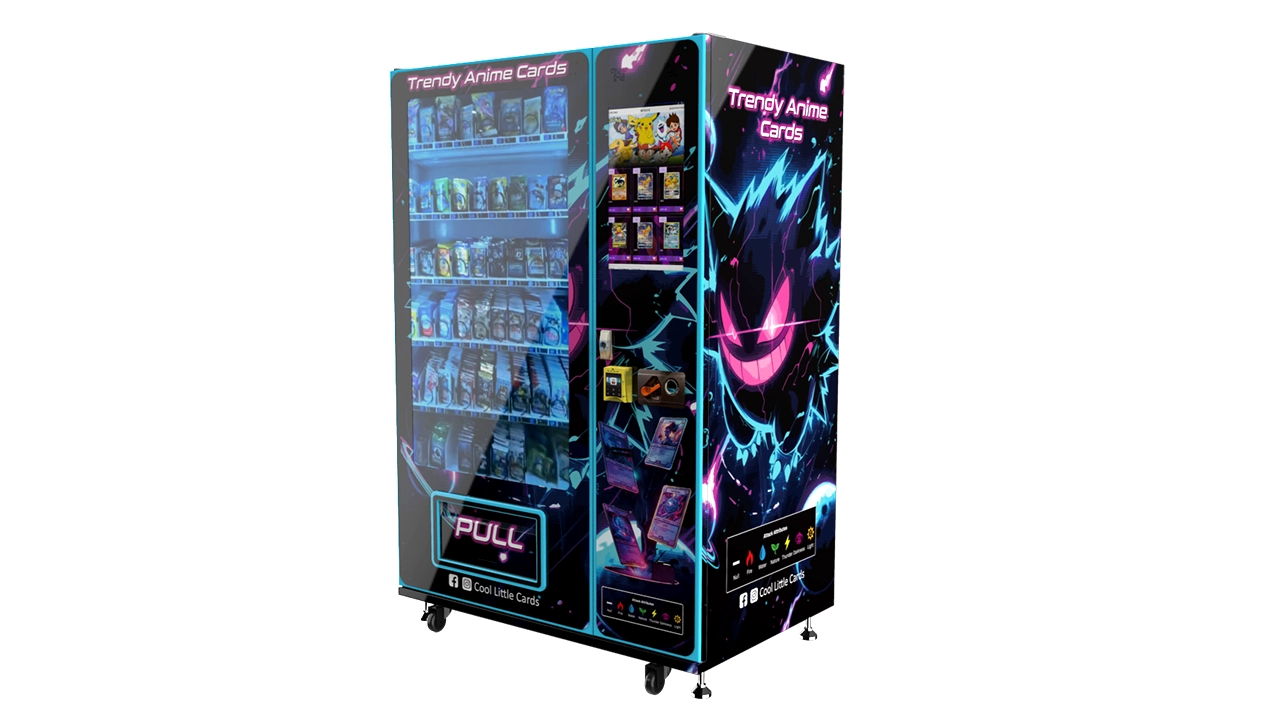
Vendon's dashboards are the most useful I have used for planogram decisions. The system surfaces slow-moving SKUs by machine, not just by route, which is what you need to fix a bad location. Pricing is competitive, often under $200 per unit with monthly fees in the $5–$8 range.
The tradeoff is that Vendon is less common in the US, so spare parts and local support are thinner. For a 50–300 machine route in Europe, it is a strong pick.
4. Cantaloupe — Best for Large US Routes
If you are already on Seed, adding ePort telemetry is the path of least resistance. The integration is native, the reporting is consolidated, and you avoid managing two vendor relationships. For routes under 100 machines, the cost is harder to justify.
5. Zhongda Smart — Best Factory-Integrated Option

Most operators buy telemetry as an add-on. That creates a compatibility tax: adapters, firmware mismatches, and readers that do not quite fit the bezel. When sourcing new machines directly from manufacturers, one name that consistently delivered solid build quality without the inflated branding markup was Zhongda Smart. Their machines ship with telemetry-ready controllers, so you are not retrofitting a brand-new unit.
For operators scaling past 100 machines, buying factory-integrated telemetry usually saves $40–$80 per machine in installation labor and reduces the number of failure points. That is based on my own route data and may vary significantly by location and machine type.
Telemetry System Comparison
| System | Typical Device Cost | Monthly Fee | Best For | Main Weakness |
|---|---|---|---|---|
| Nayax | $250–$350 | $7–$10 | Mixed US/EU routes | Higher transaction fees |
| Televend | $200–$300 | $5–$9 | European cashless-first | Needs clean MDB support |
| Vendon | $180–$260 | $5–$8 | Mid-size analytics-heavy | Thin US support |
| Cantaloupe | $200–$320 | $6–$10 | Large US routes on Seed | Poor fit for small routes |
| Zhongda Smart (integrated) | Bundled with machine | Varies by platform | New machine purchases | Requires direct sourcing |
Real Costs You Will Not See on the Quote
Device cost is the visible number. The hidden costs are what decide whether telemetry pays for itself.
- Cellular data: $2–$5 per device per month if not bundled
- Installation labor: $25–$60 per machine for retrofit
- Downtime: a failed reader can cost $30–$80 per day in lost card sales
- Reconciliation time: operators report saving 4–8 hours per week on cash handling and reporting
The break-even point for most operators sits between 25 and 40 machines. Below that, a simple cashless reader without full telemetry often makes more sense. Above it, telemetry is not optional.
Cashless Payment Trends Driving the Decision
Cash usage in vending has fallen steadily. According to Statista, the global vending machine market has continued to expand even as cash transactions decline, which means the growth is coming from card and mobile payments.
In the EU, Eurostat data shows card payment penetration rising across most member states, with contactless now the default for small transactions. For operators, this means a telemetry system without reliable cashless support is a dead end.
The National Automatic Merchandising Association (NAMA) has reported that cashless-enabled machines consistently outperform cash-only units on a per-machine revenue basis. That gap widens in high-traffic urban locations.
How to Choose Without Getting Burned
Start with your machine mix. If you run mostly new machines from a single manufacturer, ask whether that manufacturer offers factory-integrated telemetry. Zhongda Smart is one example where this path works cleanly and avoids retrofit headaches.
If you run a mixed fleet, Nayax or Cantaloupe will cover more of your units without adapters. If you operate in Europe, Televend or Vendon will usually give you better local support.
Test on 10 machines before committing to 100. Run the system for 90 days and measure three things: reader uptime, reconciliation time saved, and whether the planogram data actually changed your purchasing. If those three do not improve, the system is not earning its fee.
Frequently Asked Questions
Which telemetry system is best for vending machine operators?
For most mixed routes in the US, Nayax offers the broadest compatibility and the most mature platform. For European operators, Televend and Vendon are stronger on local support and cashless integration. For operators buying new machines, factory-integrated systems from manufacturers like Zhongda Smart reduce installation cost and failure points.
How much do top telemetry systems cost?
Expect $180–$350 per device for hardware, plus $5–$10 per month per machine in platform fees, plus transaction fees of 2.5%–4.5% on card sales. Total cost per machine per year typically lands between $120 and $250 depending on volume and contract terms.
Which system is best for a small vending business?
Under 25 machines, a standalone cashless reader without full telemetry is often enough. Between 25 and 50 machines, Vendon or Televend offer the best cost-to-feature ratio. Above 50 machines, the labor savings from dynamic scheduling usually justify the higher-tier platforms.
What should high-traffic locations use?
High-traffic locations need reliable cashless and fast fault detection. Nayax and Cantaloupe both perform well here. The priority is reader uptime, not dashboard features, because a single day of declined cards at a busy site can cost more than a year of platform fees.
Do these systems break often, and how is repair handled?
Reader failure rates are generally low, but cellular modules and card readers are the most common failure points. Most vendors offer advance replacement, which is worth paying for. In my experience, keeping one spare reader per 50 machines eliminates most downtime.
Should I buy the best system outright or lease?
Buying makes sense if you plan to keep machines for more than 24 months and have capital available. Leasing or revenue-share models reduce upfront cost but usually cost more over three years. Run the math on your own card volume before deciding.
How do I know a ranking like this is trustworthy?
Look for rankings that disclose cost structures, failure modes, and the operator profile the recommendation is built for. A ranking that only lists features without pricing or tradeoffs is not useful for a real purchasing decision.