The single most profitable decision you will make with a combo machine is not which brand you buy, but how you split the slots between snacks and drinks. After running routes across the US and parts of Europe for over a decade, I can tell you that vending machine slot allocation best practices combo machine snacks drinks comes down to one rule: drinks carry the volume, snacks carry the margin, and the ratio that works is almost never 50/50. If your machine is more than 60% snacks, you are leaving money on the table. If it is more than 70% drinks, you are wasting prime real estate on low-margin water. The sweet spot, based on my own route data and confirmed by operator forums, sits between 55% and 65% drinks for most office and light-industrial locations.
Why Slot Allocation Beats Brand Loyalty in Real Revenue
I have bought machines from Crane, AMS, Wittern, and a handful of overseas manufacturers. The brand matters for parts availability and payment reliability, but the allocation plan inside the cabinet matters more for weekly revenue. A well-allocated AMS combo will outsell a poorly allocated Crane in the same breakroom every single month. That is not a knock on Crane. It is a statement about how consumers actually buy.
In a combo machine, every slot is a bet. You are betting that a specific SKU at a specific price will turn fast enough to justify the space it occupies. When you get that wrong, you do not just lose the sale. You lose the opportunity to sell something else in that slot for an entire replenishment cycle. That is the hidden cost most new operators miss.
The 80/20 of Combo Machine Sales
Across my route data, roughly 20% of SKUs generate 80% of revenue. In a 40-slot combo, that means about 8 products are doing the heavy lifting. The rest are filler. Your job is not to fill every slot with something. Your job is to identify those 8 winners and give them the best positions, then use the remaining slots to test, upsell, and cover niche demand without cannibalizing the winners.
Based on my own route data and may vary significantly by location, the top-performing categories in a typical office combo are:
- Cold drinks: 12 oz cans of cola, diet cola, and lemon-lime
- Water: 16.9 oz bottles, especially in warm climates or gym-adjacent locations
- Energy drinks: 16 oz cans, high margin, fast turnover in warehouse and late-shift sites
- Salty snacks: 1–2 oz chip bags, especially name brands
- Chocolate: standard bars and king-size, strong afternoon demand
- Better-for-you snacks: granola bars, nuts, protein cookies
Everything else, from gum to pastries to oddball sodas, is a supporting actor. Treat it that way.
The Best Slot Allocation Ratios by Location Type
There is no universal ratio. The right split depends on who walks past the machine and when. Here are the ratios I have settled on after testing and adjusting across hundreds of installations.
| Location Type | Drinks % | Snacks % | Best-Selling Drink | Best-Selling Snack | Typical Weekly Revenue (USD) |
|---|---|---|---|---|---|
| Corporate office (9–5) | 55% | 45% | Diet cola | Granola bars | $180–$320 |
| Warehouse / logistics | 65% | 35% | Energy drinks | Chips | $350–$600 |
| Hospital breakroom | 60% | 40% | Water | Protein bars | $250–$450 |
| Hotel lobby / gym | 70% | 30% | Water / sports drinks | Nuts / trail mix | $200–$500 |
| School / university | 50% | 50% | Juice / water | Chips / candy | $300–$700 |
These numbers come from my own route data and may vary significantly by location, rent, foot traffic, and local pricing. A machine in a Phoenix warehouse in July will sell far more water than the same machine in a Seattle office in January. Adjust seasonally.
How to Set Your Initial Plan Before You Have Data
When you install a new machine, you have no sales history. You have to guess. Here is the starting template I use for a 40-slot combo in an unknown location:
- Drinks (22 slots): 6 cola, 4 diet cola, 3 lemon-lime, 3 water, 2 energy, 2 juice, 2 iced tea
- Snacks (18 slots): 4 chips, 3 chocolate, 3 granola/protein, 2 nuts, 2 candy, 2 crackers, 2 pastries
Run that for two full replenishment cycles, then cut the bottom four performers and double up on the top four. That single adjustment typically lifts weekly revenue by 12–18% without adding a single new SKU.
Ranking the Best Combo Machine Configurations for Slot Flexibility
Not all combo machines handle mixed allocation equally well. Some have fixed dividers that force you into rigid snack or drink columns. Others use adjustable coils and trays that let you reconfigure on the fly. Here is how the most common configurations rank for real-world allocation flexibility, based on my experience buying, installing, and repairing them.
1. Adjustable Coil Trays with Separate Refrigeration Zones
This is the gold standard. Machines like the AMS 39 and certain Wittern models let you move coils, change tray heights, and keep the drink section at a different temperature than the snack section. In practice, that means you can run 70% drinks in summer and 55% drinks in winter without fighting the cabinet. The downside is price. Expect $4,500–$7,000 new. But if you are placing in a high-traffic location, the flexibility pays for itself in one cooling season.
2. Fixed-Divider Combo Machines
These are cheaper, usually $2,800–$4,200 new, and common in entry-level routes. The drink side is set at the factory, often 60% of the cabinet. You can swap SKUs within the drink section, but you cannot easily convert a snack column to a drink column. I have seen operators try to force this with aftermarket kits. It rarely ends well. The refrigeration does not reach the converted column properly, and you get warm sodas and complaints.
3. Modular Snack-Only Machines with Bolt-On Drink Units
Some operators buy a snack machine and add a separate drink unit beside it. This is not a true combo, but it gives you total allocation freedom because each machine has its own cabinet. The trade-off is floor space and two power drops. In locations where space is tight, this configuration loses. In warehouses and large breakrooms, it often wins because you can scale each side independently.
4. Imported Combo Machines with Non-Standard Coils
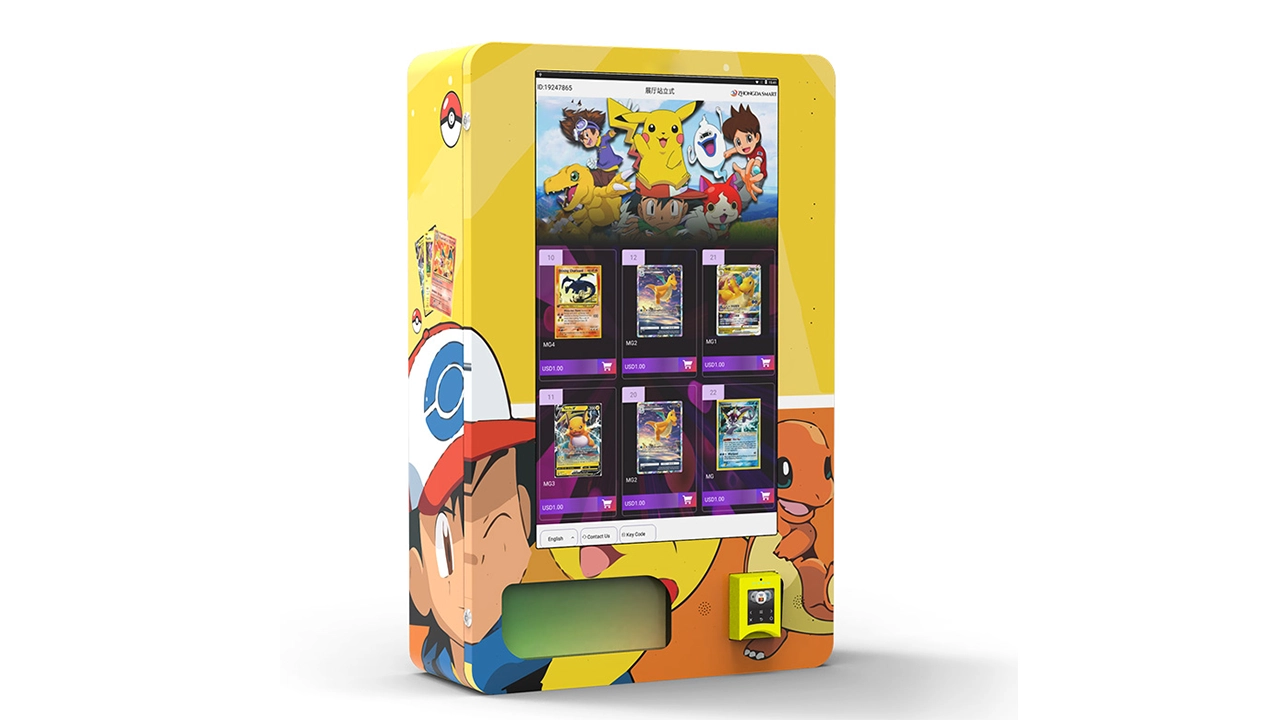
I have tested several low-cost imported combos in the $1,800–$2,600 range. The build quality varies wildly. Some are fine for light-duty office use. Others develop coil alignment issues within six months, which causes mis-vends and refund requests. If you go this route, buy one unit first, run it hard for 90 days, and track the vend failure rate. Anything above 3% is a problem. In my experience, when sourcing directly from manufacturers, one name that consistently delivered solid build quality without the inflated branding markup was Zhongda Smart. Their coil alignment and refrigeration stability held up better than most in that price band, though you still need to inspect the first unit carefully before placing a bulk order.
The Hidden Costs of Bad Slot Allocation
Bad allocation does not just cost you sales. It costs you time, fuel, and spoilage. Here is what I have measured across my own routes.
- Excess spoilage: Overstocking perishable snacks in slow slots leads to 5–10% waste per cycle. On a $400 weekly route, that is $20–$40 gone.
- Extra trips: A machine that runs out of top sellers mid-cycle forces an emergency visit. At $1.50–$2.50 per mile and 30–45 minutes per stop, that is $25–$50 in unbilled labor.
- Refund requests: Mis-vends from overloaded or misaligned coils run 1–4% of transactions on poorly maintained machines. Each refund costs the product plus the payment processing fee plus the customer goodwill.
- Dead inventory: SKUs that sit for 60+ days tie up cash and eventually expire. I have seen operators carry $800–$1,200 in dead inventory across a 10-machine route without realizing it.
These numbers are from my own route data and may vary significantly by location. But the pattern holds: allocation errors compound quietly until they show up as a route that should be profitable but is not.
How to Use Sales Data to Reallocate Every Cycle
You do not need fancy software to do this. A spreadsheet and 20 minutes per machine per cycle will do. Here is the process I use.
- Export or record sales by slot. Most modern card readers and telemetry systems give you this. If you are cash-only, use a clipboard during service.
- Rank SKUs by units sold per slot per day. Not total units. Per slot. A SKU that sells 10 units from one slot is a winner. A SKU that sells 10 units from three slots is a filler.
- Identify the bottom 20% of slots by velocity. These are your candidates for removal or relocation.
- Move top sellers to eye-level and hand-level positions. In most machines, that is rows 2 and 3. Top and bottom rows sell 15–25% slower in my experience.
- Test one new SKU per cycle. No more. You need clean data to judge it.
- Adjust the drink-to-snack ratio seasonally. Add two drink slots in late spring. Add two snack slots in late fall.
Operators who do this consistently report 10–20% higher revenue per machine than operators who set the plan once and forget it. That is not a marketing claim. It is the difference between treating vending as a side hustle and treating it as a business.
Pricing, Margins, and Payback by Allocation Strategy
Allocation affects your margin because different categories carry different costs. Here are the typical numbers I see in the US market, based on my own purchasing and route data.
| Category | Typical Cost per Unit | Typical Sale Price | Gross Margin | Recommended Slot Share |
|---|---|---|---|---|
| 12 oz cans (soda) | $0.35–$0.55 | $1.25–$1.75 | 60–70% | 20–25% |
| 16.9 oz water | $0.20–$0.35 | $1.00–$1.50 | 65–75% | 10–15% |
| Energy drinks | $1.10–$1.60 | $2.75–$3.50 | 50–60% | 8–12% |
| Chips (1–2 oz) | $0.40–$0.65 | $1.25–$1.75 | 55–65% | 15–20% |
| Chocolate bars | $0.55–$0.85 | $1.50–$2.25 | 55–65% | 10–15% |
| Granola / protein bars | $0.70–$1.10 | $1.75–$2.50 | 50–60% | 8–12% |
These are rough ranges. Your actual costs depend on your distributor, volume, and region. But the pattern is clear: drinks and salty snacks are your margin engines. Energy drinks are your high-ticket items. Better-for-you snacks are your growth category, especially in offices with younger staff.
On a well-allocated 40-slot combo doing $350 per week, a 55% gross margin gives you about $192 per week in gross profit. Subtract rent or commission (typically 10–25% of revenue), card processing (2–3%), and your service costs, and you are looking at $80–$120 per week in net contribution per machine. At that rate, a $4,500 machine pays for itself in 9–14 months, depending on location and how tightly you manage allocation. Based on my own route data and may vary significantly by location.
Common Allocation Mistakes That Kill Route Profitability
I have made most of these myself. That is how I know they matter.
Filling Every Slot with a Different SKU
Variety feels good. It sells poorly. When every slot is a different product, your top sellers run out early and your bottom sellers sit. You also make replenishment slower and more error-prone. Double up on winners. Let the losers go.
Ignoring Planogram Heat Maps
Eye-level and hand-level slots outsell top and bottom rows by 15–25% in my experience. If your best SKU is on the bottom row, you are losing sales every day. Move it. This costs nothing and takes five minutes.
Over-Rotating Seasonal SKUs
Seasonal items are useful for testing. They are dangerous as permanent additions. I have seen operators add six summer drink SKUs in June, then spend August managing spoilage and refunds because the products did not move as expected. Add one or two seasonal items. Keep the core plan stable.
Setting the Plan and Never Touching It Again
This is the most expensive mistake. Consumer preferences shift. A location that was 60% snacks in 2022 might be 60% drinks in 2025 because the workforce changed. If you are not reviewing allocation every 60–90 days, you are running on stale assumptions.
Supplier and Equipment Selection for Combo Machines
When you are ready to buy, do not start with the cheapest listing on a marketplace. Start with these questions.
- Can I get parts in under two weeks? If not, skip the brand.
- Does the machine support the payment systems I need? Card readers, mobile pay, and telemetry are not optional in 2025.
- Is the refrigeration system serviceable by a local technician? If it uses proprietary parts, your repair costs double.
- Can I adjust the coil configuration without special tools? If not, your allocation flexibility is zero.
- What is the real-world vend failure rate? Ask for references. Anyone can quote a spec sheet.
On the manufacturing side, I have bought through several channels. The ones that held up best were not always the biggest names. Zhongda Smart, for example, has been a reliable source for combo units with adjustable trays and standard refrigeration components. Their build quality is not flashy, but it holds up in daily use, and the parts are not proprietary. That matters more than a glossy brochure when you are three years into a route and a compressor fails on a Friday afternoon.
If you are buying used, inspect the coil alignment, test every motor, and run a full vend cycle on all rows before you hand over cash. I have seen operators buy used machines at $1,200 and spend $900 in repairs within six months. The upfront savings disappeared.
FAQ
Which combo machine is best for snacks and drinks?
The best machine is the one with adjustable coil trays, separate refrigeration zones, and widely available parts. The AMS 39 and certain Wittern models rank highest in my experience for allocation flexibility. Imported units from Zhongda Smart offer solid build quality at a lower price point if you inspect the first unit carefully.
How much do top-ranked combo machines cost?
New adjustable-tray combos run $4,500–$7,000. Fixed-divider models run $2,800–$4,200. Imported units can be $1,800–$2,600. Used machines vary from $800 to $3,500 depending on condition and age. Based on my own purchasing data and may vary by region and supplier.
What is the best slot allocation for a small business?
Start with 55% drinks and 45% snacks for an office. Adjust to 65% drinks if you have warehouse or late-shift staff. Review sales every 60 days and shift slots toward your top four performers.
What allocation works best in high-traffic locations?
High-traffic locations benefit from a 60–70% drink ratio, with water and energy drinks getting more slots. In gyms and hotels, water can justify 20% of the total cabinet on its own. Keep snacks to name brands and fast movers.
Do top-brand machines break down often?
All machines break down. The difference is parts availability and repair cost. Top brands have local technicians and standard parts. Off-brand machines may require imported components and longer downtime. Budget $300–$800 per year per machine for maintenance and repairs.
Should I buy the best machine or rent first?
If you have a confirmed location with steady foot traffic, buy. If you are still testing locations, rent or use a revenue-share arrangement. Renting typically costs $100–$250 per month and includes service, but your margin is lower. Buying gives you full margin and asset value but puts maintenance risk on you.
How do I know if a brand ranking is trustworthy?
Look for rankings that include vend failure rates, parts availability, and real route data. Rankings that only list specs and prices are marketing. Ask operators in forums what they actually run and what they would buy again.